

Aid deliveries across the main Gaza crossing are suspended by the UN
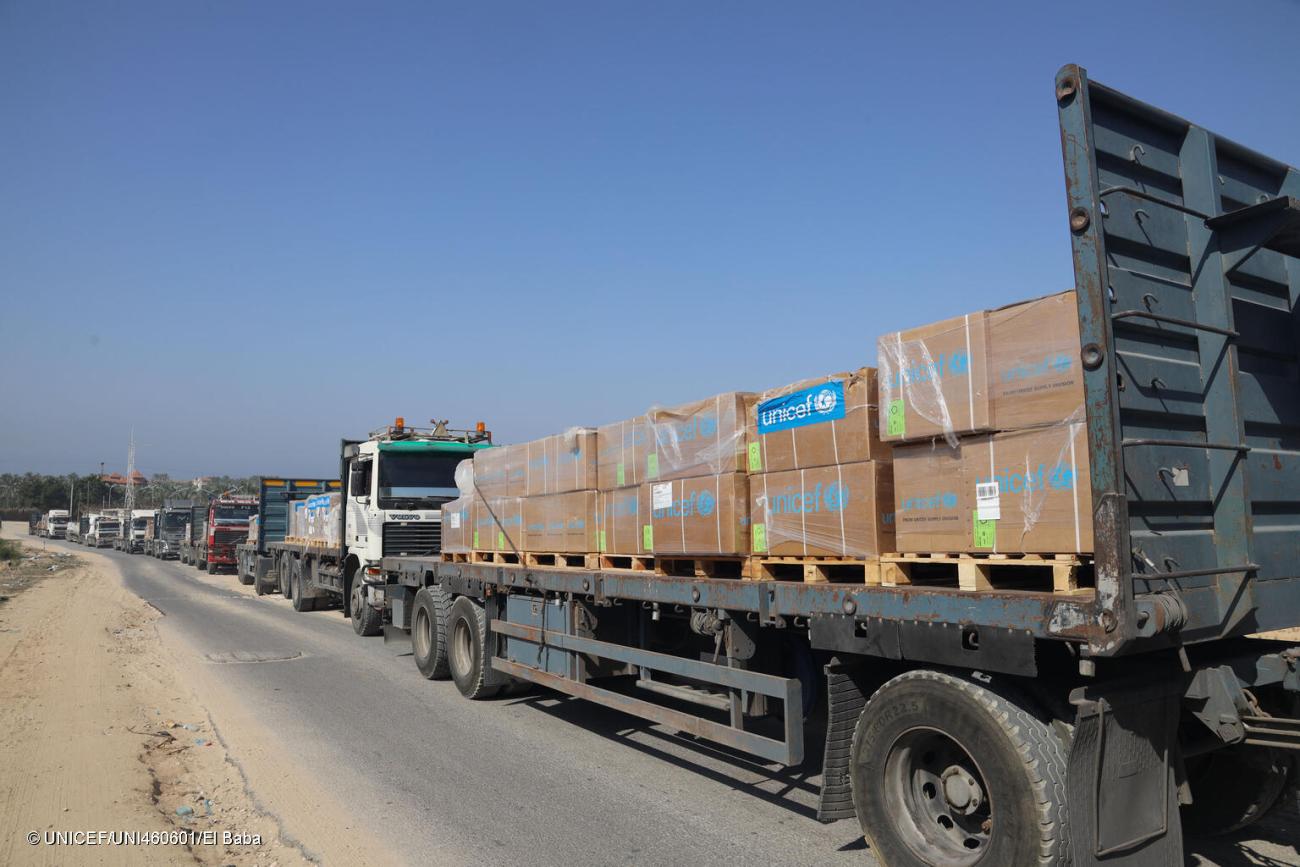
Due to security concerns, the United Nations agency that aids Palestinians has announced that it is stopping delivery over the major crossing between Israel and Gaza.
Philippe Lazzarini, the head of UNRWA, urged Israel to uphold law and order after claiming that armed gangs had looted two recent convoys close to the Kerem Shalom border.
In the past, Israel has claimed that it makes it easier for aid to enter Gaza and charged Hamas with stealing and hijacking packages.
Kerem Shalom is primarily responsible for delivering aid to Gaza’s population of over two million, which the UN has warned is in danger of starvation.
The primary barrier to the distribution of supplies, according to humanitarian workers, is the violent thefts committed by criminal groups in recent weeks.
On November 16, masked individuals attacked a convoy of 109 food-carrying trucks and took 97 of them, holding the drivers at gunpoint.
After that, a well-known criminal family from Gaza blocked the major route that led out of Kerem Shalom for two days. They put up iron barriers and allegedly opened fire on trucks that were attempting to reach an aid distribution location.
Residents and aid workers have also claimed that armed individuals operate in a restricted area near the Israel-Gaza border, right in front of the Israel Defense Forces (IDF).
Mr. Lazzarini, who announced the delivery halt, claimed that the road away from the bridge “has not been safe for months” due to previous incidents last month and the theft of five further lorries on Saturday.
The news came after an Israeli strike on Saturday claimed the lives of two additional civilians and three employees of the humanitarian organization World Central Kitchen (WCK).
A WCK employee who had participated in the October 7 attacks was the strike’s target, according to Israel.
“The delivery of humanitarian aid must never be dangerous or turn into an ordeal,” added Mr. Lazzarini.
He added that there had been a “breakdown of law and order” and that Israel was responsible for protecting relief workers.
“They must ensure aid flows into Gaza safely, and they must refrain from attacks on humanitarian workers,” the president stated.
The majority of aid enters Gaza through Kerem Shalom, although Israel has opened several other crossings into central and northern Gaza in recent months in response to international pressure to boost the flow.
In a September speech to the United Nations, Israeli Prime Minister Benjamin Netanyahu emphasized that his government was permitting “more than 3,000 calories a day for every man, woman, and child” to enter Gaza.
He charged that in order to keep control of the strip, Hamas sold food at outrageous prices and stole assistance packages.
The Coordinator of Government Activities in the Territories, who is in charge of the Israeli government’s civilian policy in Gaza, responded to UNRWA’s announcement by stating that other aid organizations were providing assistance.
“We will continue to work with the international community to increase the amount of aid making its way into Gaza through the Kerem Shalom Crossing as well as the other four crossings between Israel and Gaza,” it stated.
The UN and a consortium of international organizations conducted a survey last month, the Integrated Food Security Phase Classification, which found that the number of relief ships entering Gaza is lower than it has been since the conflict began in October 2023.
It stated that the “humanitarian situation in the Gaza Strip [was] extremely grave and rapidly deteriorating” and that in the “reasonable worst-case scenario, a risk of famine existed for the whole of the Gaza Strip.”
The investigation determined that “immediate action [was] required from all actors who are directly taking part in the conflict or have influence on its conduct to avert and alleviate this catastrophic situation.”.