

Malaysia Champions Energy and Food Security, Digital Cooperation Agenda at ASEAN Summit
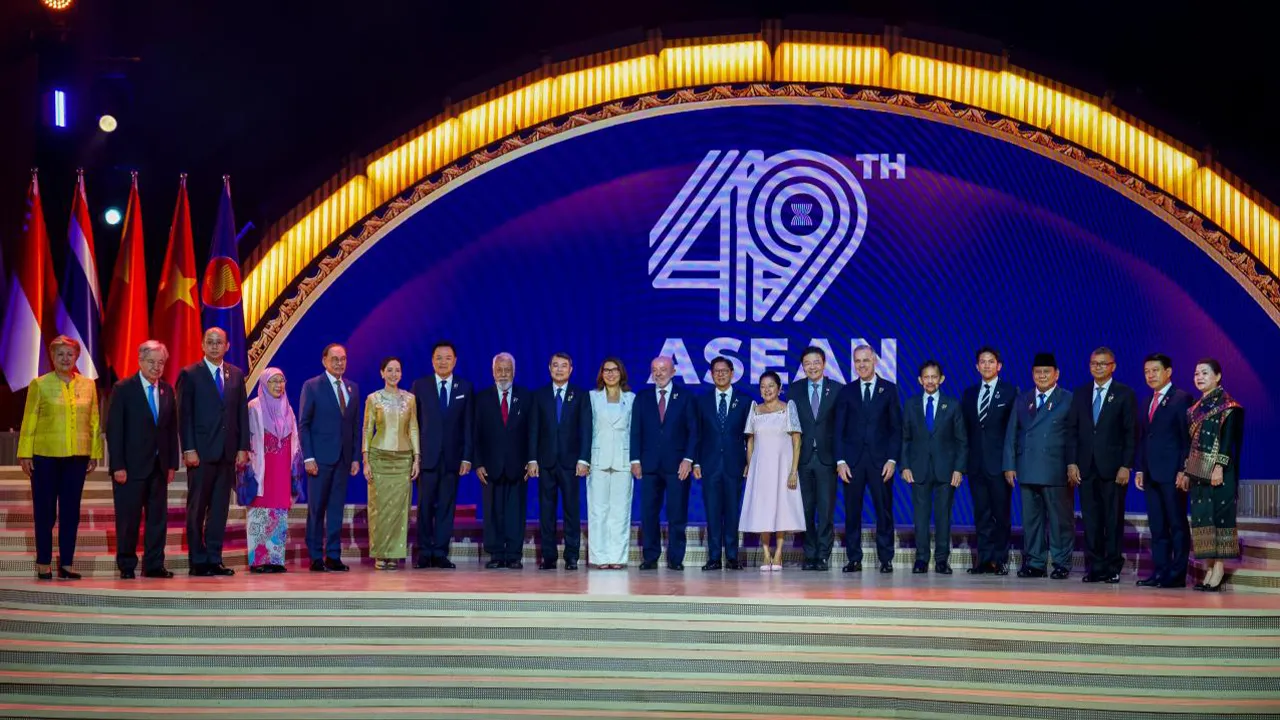
MANILA: Malaysia called for stronger regional cooperation in energy and food security, as well as supply chain resilience, at the 49th ASEAN Summit and Related Summits, which concluded here recently.
Malaysia’s priorities also included transboundary haze, artificial intelligence (AI) and cybersecurity, alongside efforts to finalise negotiations on the Code of Conduct (COC) in the South China Sea and continue dialogue on Myanmar.
These efforts reflect Malaysia’s commitment to ensuring that regional cooperation translates into tangible benefits for people across the region.
Prime Minister Datuk Seri Anwar Ibrahim and Foreign Minister Datuk Seri Mohamad Hasan maintained packed schedules throughout the summit, including meetings with ASEAN leaders and dialogue partners.
Mohamad delivered several national statements on Anwar’s behalf on Tuesday when the Prime Minister briefly returned to Kuala Lumpur to welcome French President Emmanuel Macron before returning to Manila on the same day to attend the Special ASEAN-United States (US) Summit.
Economic resilience was among the main areas of focus when Anwar, during Sunday’s plenary session, urged ASEAN to diversify sources of food and medical supplies, expand regional production and strengthen cooperation in essential supplies, medicine approvals, procurement and stockpiling.
He also called for greater energy sharing among member states, efforts to revitalise the ASEAN Petroleum Security Agreement (APSA) and accelerated progress in developing an integrated ASEAN Power Grid (APG).
At the ASEAN Plus Three Summit on Tuesday, Malaysia called for the ASEAN Plus Three Emergency Rice Reserve (APTERR) to be strengthened and a regional food reserve network covering other essential food commodities to be established to protect the region against supply disruptions.
Delivering Malaysia’s national statement at the summit, Anwar called for more effective utilisation of the Regional Comprehensive Economic Partnership (RCEP), alongside stronger coordination to ensure the smooth supply of food, fuel and agricultural inputs during disruptions.
“We must strengthen the existing ASEAN Plus Three Emergency Rice Reserve (APTERR) towards establishing a regional food reserve network that also covers essential commodities beyond rice, by pooling resources to address sudden supply disruptions,” he said.
On energy resilience, Anwar said petroleum stockpiling arrangements should be implemented voluntarily, based on commercial considerations and taking into account each country’s circumstances and level of preparedness.
Malaysia also welcomed the upgraded ASEAN-China Free Trade Agreement while emphasising the importance of balanced trade.
In addition, Malaysia called for the early conclusion of the review of the ASEAN-India Trade Agreement to improve market access and strengthen supply chains.
Cooperation with India also covered digital security, with Malaysia proposing closer intelligence sharing, capacity building and regulatory coordination to combat cross-border fraud.
To strengthen regional digital integration, Malaysia joined other ASEAN member states in signing the ASEAN Digital Economy Framework Agreement (DEFA) on Saturday to facilitate online trade and expand businesses’ access to regional markets.
Malaysia also called for an early and comprehensive review of the ASEAN-Japan Comprehensive Economic Partnership (AJCEP) to strengthen trade relations and regional economic resilience.
At the 21st East Asia Summit on Tuesday, Anwar called for stronger cybersecurity defences and governance, warning that AI-powered attacks could potentially cripple critical infrastructure across borders.
On regional security, Anwar called for renewed political commitment to finalise an effective and substantive COC in the South China Sea, stressing that negotiations had reached a critical stage.
He said ASEAN and China remained committed to accelerating negotiations despite failing to meet the 2026 target, with no new deadline set so far.
China has agreed in principle to general provisions relating to peace and navigational rights in the South China Sea, although further details have yet to be finalised.
Meanwhile, Philippine Secretary of Foreign Affairs Ma. Theresa Lazaro said the failure to meet the target should not be regarded as an overall failure, given that provisional agreement had been reached on more than 80 per cent of the paragraphs in the draft.
Negotiations will continue under Singapore’s ASEAN chairmanship in 2027.
On Myanmar, Anwar urged ASEAN to intensify engagement efforts to ease internal tensions and restore peace and stability in the country.
He said Malaysia remained supportive of the implementation of ASEAN’s Five-Point Consensus (5PC), but any approach adopted must take into account the latest developments in Myanmar.
Malaysia also raised the suffering of Palestinians in Gaza, calling for an end to atrocities and the achievement of a just and peaceful resolution.
At the Special ASEAN-US Summit, Anwar welcomed President Donald Trump’s recognition of Malaysia’s efforts to ease tensions between Thailand and Cambodia, while emphasising the importance of continued dialogue to ensure lasting border peace and regional stability.
He said the summit also provided opportunities to strengthen ASEAN-US cooperation in trade, investment and technology.
Commenting on Malaysia’s participation, International Islamic University Malaysia (IIUM) Professor of ASEAN Studies and Director of the Institute of International and ASEAN Studies (IINTAS), Prof Dr Phar Kim Beng, said ASEAN remained the cornerstone of Malaysia’s foreign policy, given its role as a founding member and its close ties with neighbouring countries.
“All prime ministers, particularly since 1967, have placed great emphasis on ASEAN,” he told Bernama.
He said relations with neighbouring countries remained a priority for Malaysia, alongside its commitment to maintaining ties with major powers and other international organisations.
Anwar’s packed schedule and Mohamad’s role in delivering national statements on the Prime Minister’s behalf reflected this priority, ensuring that Malaysia’s interests continued to be highlighted throughout the summit sessions.
The 49th ASEAN Summit and Related Summits concluded with the Philippines handing over the chairmanship to Singapore for 2027, marking a transition from the theme “Navigating Our Future, Together” to “Deeper Integration, Wider Partnerships”.
BERNAMA