

Seven Decades of UiTM Shaping Generations
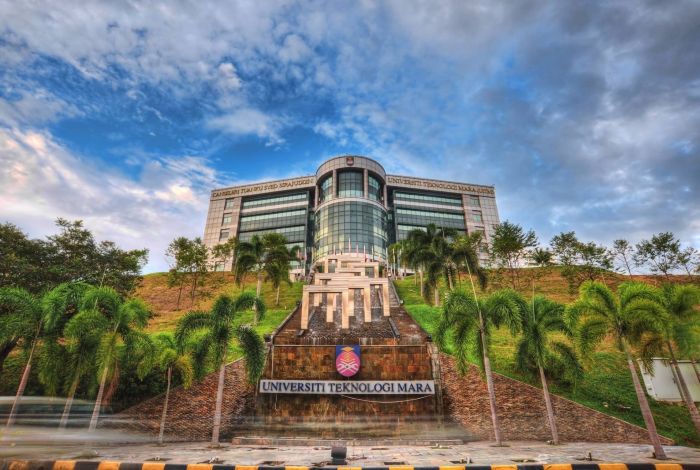
IN 1956, along Jalan Othman in Petaling Jaya, a group of young Malays arrived carrying worn-out suitcases and great hopes. They were the children of rubber tappers, fishermen and farmers from underprivileged backgrounds who wanted to change their families’ fortunes through the only “ladder” available to them — education.
They were the first students of Dewan Latehan RIDA, marking the beginning of the formal empowerment of the Bumiputera agenda in this country, in line with Article 153 of the Federal Constitution.
Today, seven decades later, Universiti Teknologi Mara (UiTM) looks vastly different.
The entire UiTM system accommodates 181,341 students across 31 campuses nationwide. Students arrive with laptops, discussing artificial intelligence (AI), start-ups and global mobility opportunities to Korea, Germany and various international destinations.
Their clothing and language may be different, but their spirit remains the same — the determination to prove that Bumiputera youth are equally capable of achieving success.
This is what is consistently emphasised through the aspirations of Agenda TAMU, an initiative known as Transformasi Mahasiswa UiTM (UiTM Student Transformation).
The role of the Student Affairs Department (HEP) is not merely to manage residential colleges, activities or discipline. HEP is responsible for ensuring that the spirit and aspirations behind UiTM’s establishment, which have shaped it into a revered Bumiputera institution, remain alive in every generation of students.
Throughout its history, UiTM has continued to evolve in response to changing times.
This transformation can be seen through three major phases.
First Phase: UiTM as a Gateway to Access — Providing Opportunities
During the RIDA era through to Institut Teknologi Mara (ITM), the greatest challenge was access to formal education. Did Malay children have the opportunity to pursue their studies?
The role of student welfare management at that time was to ensure the provision of comfortable accommodation, educational assistance from Majlis Amanah Rakyat (MARA) and food.
The underlying responsibility was also to build confidence among children from rural villages that they, too, deserved a place in institutions of higher learning.
Graduates from this phase became among the key driving forces of the national economy in the early post-independence era.
Many entered various fields in the private sector, including finance, hospitality, mass communication and plantations.
Others were recruited into the public sector as teachers and government officers.
This demonstrated that access to higher education could transform a family’s future.
Second Phase: UiTM as a Catalyst — Building Employability
When ITM became UiTM in 1999, the demands of the times also changed.
The country needed graduates who not only possessed academic qualifications but could also apply their knowledge and soft skills in the workplace.
Consequently, the role of student management expanded beyond welfare to character development and student leadership empowerment.
This also involved strengthening career centres, enhancing credit-bearing co-curricular programmes, and empowering the Student Representative Council (MPP) and student associations.
We want UiTM graduates not only to excel in examinations but also to be prepared for job interviews and the working world.
These efforts have also yielded results in graduate employability achievements.
Based on UiTM’s latest data, the Graduate Employability (GE) rate stands at 94 per cent, while Graduate Employability in the Labour Market (GM) records 94.6 per cent.
Meanwhile, data from the Graduate Tracer Study reported by UiTM in 2025 recorded a GE rate of 93.8 per cent, while GM reached 94.7 per cent.
These figures reflect young people who are building careers, becoming entrepreneurs and carrying UiTM’s name into various sectors.
Third Phase: Today — Building Resilience and Character
We are now in a more complex phase.
The challenges facing university students are no longer limited to gaining access to education or securing employment.
Instead, they must possess resilience, competitiveness and character to navigate a rapidly changing world.
Today’s students face different challenges from those of the RIDA generation.
They must contend with rising living costs, responsibilities as children carrying their families’ hopes, the need to adapt to new technologies, and competition in academics, careers and social life.
Therefore, student management today cannot focus solely on programmes. It must also instil humanitarian values.
Through Agenda TAMU, we are focusing on three key areas of development that will shape future UiTM graduates.
RESILIENT GRADUATES
While the focus in the past was on providing accommodation and food, today we must also ensure that students receive support in coping with life’s pressures and completing their studies.
Counselling centres must be strengthened, student welfare networks expanded, student food banks established and student zakat initiatives reinforced.
In 2026, through the Corporate Zakat Wakalah programme of the Companies Commission of Malaysia (SSM), a total of RM220,000 was channelled to 200 poor and needy asnaf students at UiTM Shah Alam to help settle outstanding tuition fees and ease their financial burdens.
Earlier, in 2024, through the Iqra’ TH Programme, Lembaga Tabung Haji (TH) provided RM900,000 to 1,523 diploma and degree students from asnaf families at UiTM Shah Alam as one-off living assistance.
UiTM’s own zakat ecosystem has also continued to expand.
In 2025, UiTM’s Zakat, Charity and Waqf Division (ZAWAF) recorded zakat collections amounting to RM17.08 million, while RM8.48 million was distributed to eligible recipients.
This approach has also been expanded through the Dapur Siswa Madani and Menu Kasih Siswa initiatives to ensure that living costs do not prevent students from attending classes.
To me, as long as there is even one student forced to miss classes because they cannot afford transport, have no food or are burdened by outstanding tuition fees, HEP’s work remains unfinished.
GRADUATES WHO CREATE, NOT MERELY SEEK JOBS
We do not want student success to be measured solely by the number of graduates who secure employment.
We want them to be capable of creating value and opportunities.
This progress was demonstrated when UiTM Shah Alam student Amirul Anas Zulkifli was named National Student Entrepreneur Icon (ATSN) 2026 on October 1.
Together with two friends, he developed Amber Coffee with a capital of approximately RM15,000, proving that campuses can serve as platforms for students to create businesses, opportunities and their own futures.
The Residential College Student Entrepreneurship Corridor initiative across all campuses under the TAMU project provides opportunities for students to develop their entrepreneurial talents.
Student entrepreneurship is being revitalised at every branch campus.
Students are also encouraged to introduce products through digital platforms from their first semester and are exposed to start-ups, the digital economy and emerging forms of employment.
The spirit of independence that was once part of RIDA’s identity must be translated into the realities of today’s world.
Students must not only know how to secure employment but also how to build networks, solve problems, generate value and create job opportunities.
Therefore, employability and entrepreneurship are two sides of the same effort to produce graduates capable of determining the direction of their own lives and careers.
GRADUATES WITH MADANI VALUES AND A GLOBAL OUTLOOK
This is among UiTM’s unique qualities.
We see students who lead prayers as imams at campus mosques in the morning, present research in English at international conferences in the afternoon and serve as volunteers at night.
These are the graduates we want to produce.
Their roots remain firmly grounded in religion, race and culture, but their wings are capable of taking them onto the global stage.
They must be able to compete internationally without losing their own values and identity.
Therefore, academics, sports, arts, leadership, innovation and volunteerism are all components of holistic human development.
Discipline, patriotism, creativity and the arts can also build confidence and personal resilience.
Ultimately, regardless of the phase we go through, UiTM’s responsibility remains unchanged.
Every year, tens of thousands of young people become part of this large family.
In September 2026 alone, nearly 40,000 new students participated in Minggu Destini Siswa, or Student Orientation Week, through an approach that also utilised digital technology.
They come from different backgrounds, but their dreams are the same — to study, succeed and transform their families’ lives.
UTUSAN
Author:
Professor Dr Mohd Sazili Shahibi is the Deputy Vice-Chancellor (Student Affairs) of Universiti Teknologi Mara (UiTM).