

Traditional Bank Collateral Requirements Hinder SME Financing
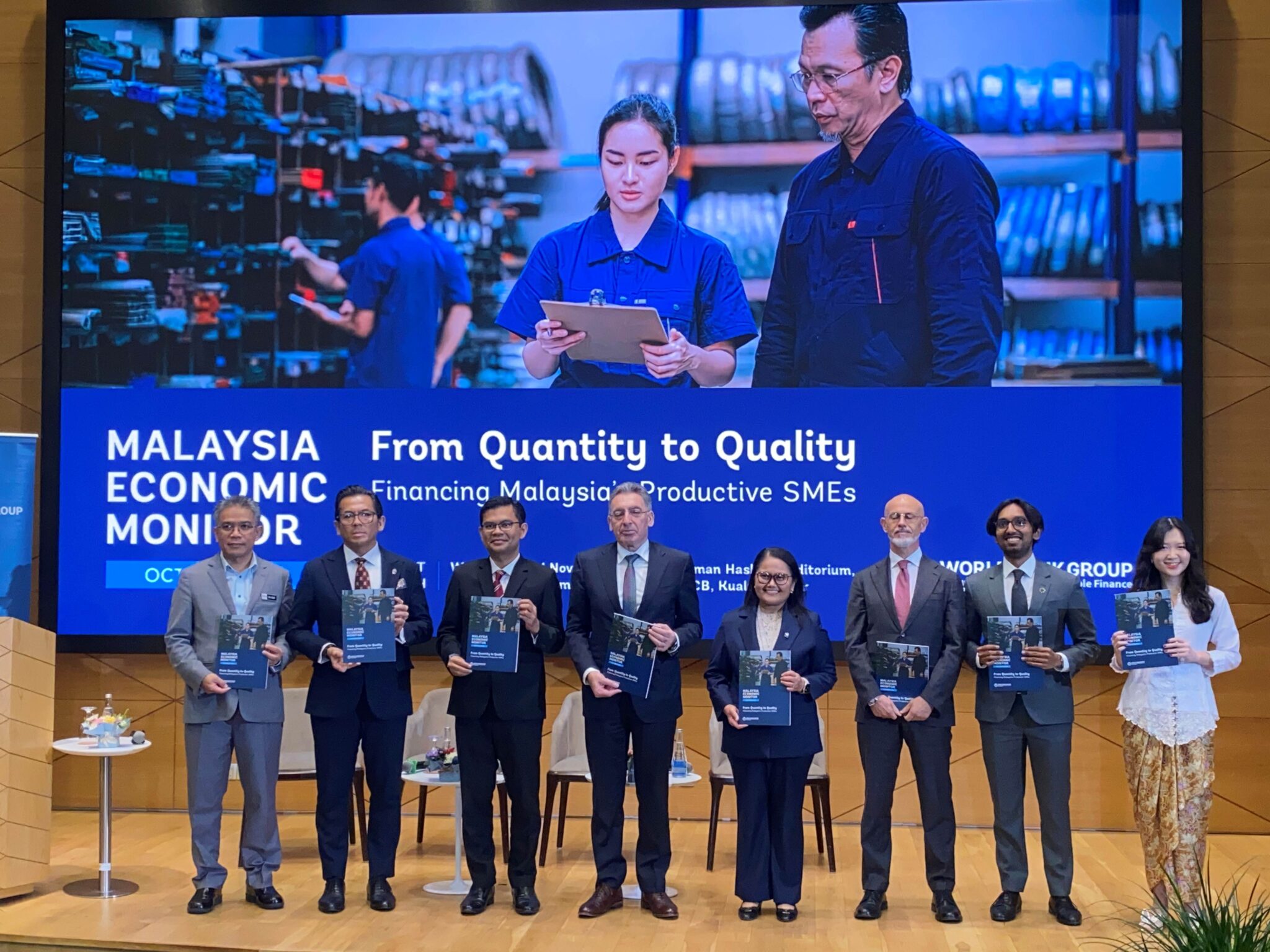
KUALA LUMPUR: Banking institutions’ reliance on conventional collateral, such as land and buildings, makes it difficult for small and medium enterprises (SMEs) to obtain financing, particularly companies with intangible assets such as software and technical expertise.
Economy Minister Akmal Nasrullah Mohd Nasir said traditional collateral requirements could disadvantage firms with growth potential but insufficient physical assets to meet banks’ financing conditions.
He said the situation demonstrated that access to financing alone was insufficient if the financial facilities available did not meet businesses’ investment and expansion needs.
“According to the World Bank’s 33rd edition of the Malaysia Economic Monitor report, SMEs finance approximately two-thirds of their fixed asset investments using internal funds.
“External financing remains heavily dependent on bank debt, while equity financing and other forms of risk-bearing capital remain limited,” he said when speaking at the launch of the report here yesterday.
Assets such as machinery, accounts receivable, software and technical expertise are becoming increasingly important in the modern economy, but they are not necessarily accepted as collateral in the same way as land and buildings.
Elaborating, he said the report also showed that bank financing accounted for 28 per cent of fixed investments by small and medium-sized firms, compared with approximately 50 per cent for large, highly productive firms.
“This disparity highlights the need for financing mechanisms that are better suited to the requirements of high-potential firms, particularly companies that need innovation-driven and long-term investments.
“When productive firms fail to obtain suitable financing, it not only affects business growth but could also cause Malaysia to miss opportunities in innovation, scaling up operations and creating high-value jobs.
“Therefore, SME financing must be viewed as part of the national productivity improvement agenda, rather than merely an effort to expand access to credit facilities,” he added.
In a related development, Akmal said SMEs’ access to bank financing had shown progress, with approximately 38 per cent of firms in Malaysia having loans or credit facilities, while loan approval rates increased from around 68 per cent in 2015 to 86 per cent in 2024.
However, he said this progress must be followed by the provision of higher-quality and more diversified financing options to meet firms’ investment needs.
“The next phase is about quality, not merely quantity. The question is whether firms can obtain financing that meets their investment needs and supports productivity improvements,” he said.
Meanwhile, World Bank Division Director for the Philippines, Malaysia and Brunei, Dr Zafer Mustafaoglu, said Malaysia was moving closer to achieving high-income nation status, but SMEs needed to transition towards higher-productivity activities, technology adoption and innovation.
He said the transition required financing that focused not only on working capital and basic investments but also included higher-risk growth capital to enable companies to penetrate global markets, implement automation and adopt digital technologies and artificial intelligence (AI).
“Financing must also support the green transition and investments that depend on companies’ future productive capabilities, rather than solely on existing collateral.
“The question is not simply whether SMEs can access credit, but whether the financing available genuinely meets their productive and innovative investment needs,” he said.
UTUSAN MALAYSIA