

PM Tenure Limit Bill Ready for Second Reading, Says Azalina
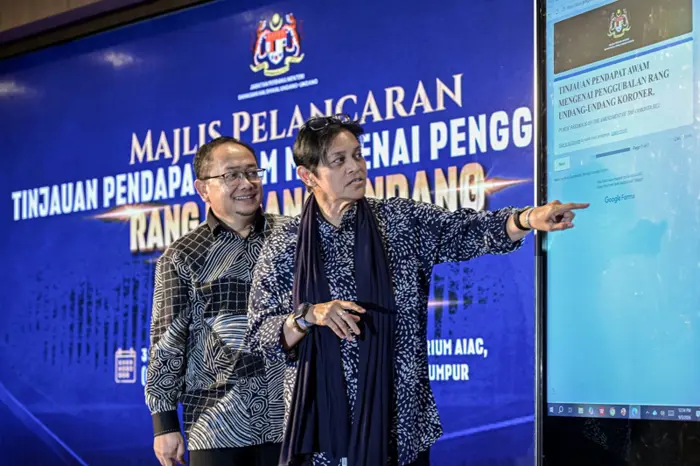
KUALA LUMPUR: The proposed bill to limit the tenure of the prime minister is ready for its second reading in the Dewan Rakyat, Minister in the Prime Minister’s Department (Law and Institutional Reform) Datuk Seri Azalina Othman Said said today.
However, Azalina said the decision on whether to table the bill for debate and voting during the next parliamentary sitting rests with the Leader of the House, Prime Minister Datuk Seri Anwar Ibrahim.
“Everything is ready. The limit on the Prime Minister’s term is ready. It is subject to the Leader of the House and the Prime Minister on whether we want to bring it for a vote at the next sitting,” she told reporters after launching the Public Opinion Survey on the Drafting of the Coroners Bill here today.
Azalina said the proposed term limit would require amendments to the Federal Constitution and, therefore, must secure the support of a two-thirds majority in Parliament.
She said the same constitutional requirement would apply to the proposed bill to separate the roles of the Attorney General (AG) and Public Prosecutor (PP).
“Since both bills involve amendments to the Federal Constitution, we need a two-thirds majority. The same applies to the separation of the roles of the AG and PP, which also requires a two-thirds majority. So, domestic politics does play a role,” she said.
Azalina also called on all Members of Parliament, regardless of political affiliation, to support the proposed institutional reforms.
She said the reforms could provide greater benefits to the country, particularly by strengthening public confidence in Malaysia’s legal and governance institutions.
“I sincerely hope that members of the Dewan Rakyat, the Dewan Negara and all political parties will welcome these bills because they bring more benefits than drawbacks. This is for our country,” she said.
On the proposed separation of the Attorney General and Public Prosecutor roles, Azalina said the reform was expected to strengthen public confidence in the country’s prosecution system.
She said the separation could help address public perceptions that prosecutions might be politically motivated.
“I do not want to hear people claiming, whenever they are charged, that there is some hidden agenda behind it,” she said.
Azalina expressed hope that the proposed separation of powers would enhance confidence in the prosecution system, particularly if the public prosecutor were appointed through a parliamentary process.
“InsyaAllah, this separation of roles will inspire greater confidence, especially when the Public Prosecutor is appointed through a parliamentary process,” she said.
The proposed constitutional reforms are now awaiting consideration by the government and Parliament before they can proceed to the next stage of the legislative process.