

No Reason For Malaysia To ‘Shelter’ Refugees
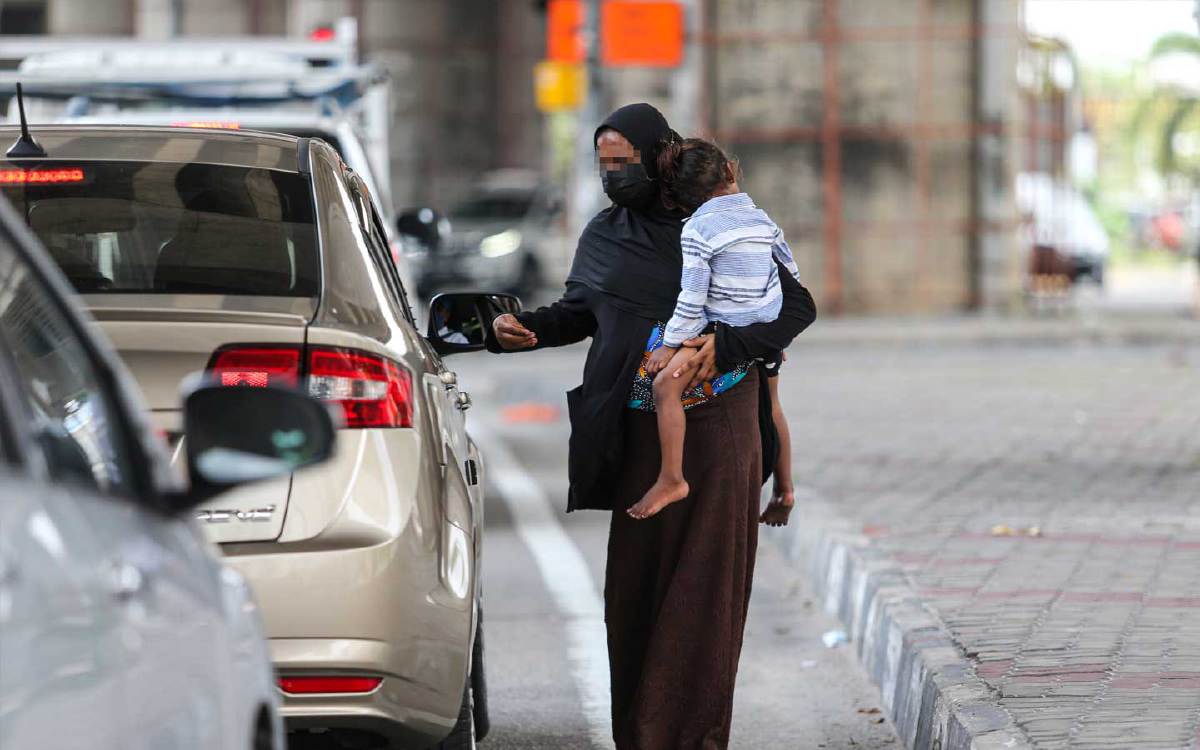
KUALA LUMPUR: There is confusion regarding whether holders of United Nations High Commissioner for Refugees (UNHCR) cards should be given the same treatment as local citizens.
Card holders are also ‘not immune’ to the law, and in fact, this group is subject to the laws of the country in which they reside.
Nusantara Strategic Research Academy (NASR) Academic Expert, Prof Dr Azmi Hassan, said that Malaysia is not a signatory to the 1951 Refugee Convention, thus it is not bound to provide facilities for refugees.
“Regardless of whether they have a card or not, we are not obliged to provide housing, employment, or education to them.
“Malaysia is not a signatory to this convention, so there is no requirement for us to provide facilities as stipulated in that agreement,” he said.
Azmi said that even signatory countries such as Australia are seen as unwilling to accept refugees and still maintain their firm policies, let alone Malaysia which is not a signatory to the convention.
“Australia is a signatory to this convention, but as much as possible, they do not want asylum seekers to reach Australian soil because they would have to provide all those facilities for refugees if they stay in that country.
“The Australian government chooses to intercept asylum seeker boats at sea and place them in offshore processing centres such as Manus and Nauru to ensure that these individuals do not successfully land on mainland Australia.
“This proves that the status of being a signatory to the convention does not necessarily mean that a country is obliged to facilitate the entry of asylum seekers into its territory,” he said.
For the record, the 1951 Refugee Convention was formed shortly after World War II to provide protection to those forced to flee due to fear of persecution based on race, religion, and nationality.
This convention provides refugees with access to the courts of the host country, the right to work and receive education, as well as several other social, economic, and civil rights equivalent to citizens of the host country, in addition to prohibiting any punishment against refugees solely for their illegal entry.
However, Azmi acknowledged that Malaysia faces its own dilemma, particularly regarding the perception if enforcement actions that are too strict are implemented.
“We may be labelled as inhumane for taking firm action, while at the same time, we are practising local laws.
“This is the dilemma we are facing, including the latest issues at hand, so it needs to be managed properly without offending any party,” he said.
Harian Metro