

Iran Protests Intensify as Exiled Son of Last Shah Seeks Political Role
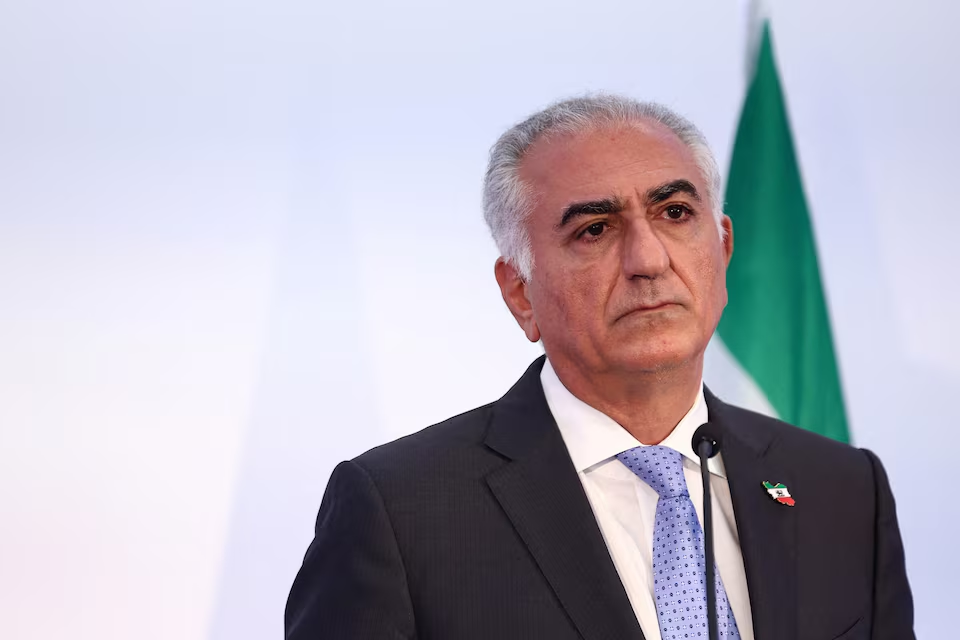
Jan 11: As Iran faces its largest wave of anti-government protests in years, Reza Pahlavi, the exiled son of the country’s last monarch, is increasingly positioning himself as a potential figurehead for political transition, despite decades away from the country and mixed public sentiment at home.
Pahlavi, 65, has lived outside Iran since before the 1979 Islamic Revolution that overthrew his father, Mohammad Reza Shah Pahlavi. From exile in the United States, he has issued a series of messages backing protesters and calling for the end of Iran’s clerical rule, which has governed the country for nearly five decades.
In recent video statements shared on social media platform X, Pahlavi has vowed to help dismantle what he describes as the Islamic Republic’s “fragile and worn-out system of repression.” He has urged Iranians to continue protests demanding political freedom, economic reform, and democratic governance.
The latest unrest has been fuelled primarily by Iran’s worsening economic crisis, exacerbated by years of international sanctions and intensified by a 12-day conflict in June, during which Israeli and U.S. airstrikes targeted Iranian facilities. Protesters across several cities have voiced anger over inflation, unemployment, and declining living standards.
While some demonstrators have chanted slogans such as “Long live the shah,” others reject any return to monarchy. Many instead call for a democratic system free from both clerical rule and royal legacy. “We already experienced the Pahlavis, and it failed,” said Azadeh, a 27-year-old protester from northern Iran, in a message shared online. “Now we want democracy.”
Unlike the 1979 revolution, which was unified under the leadership of Ayatollah Ruhollah Khomeini, Iran’s current opposition remains fragmented, with no single leader commanding universal support. Pahlavi has acknowledged this reality but says he is prepared to help guide a transitional process, insisting that the Iranian people should ultimately decide the country’s political future.
“There is only one path to peace,” he said in a speech posted last June. “That path is a secular, democratic Iran. I submit myself to my compatriots to help lead a peaceful transition.”
Measuring Pahlavi’s actual support inside Iran remains difficult due to internet shutdowns and tight government controls. However, he enjoys visible backing among parts of the Iranian diaspora, particularly in the United States and Europe, where he has long campaigned against Tehran’s leadership.
Born in 1960 and declared crown prince at the age of seven, Pahlavi left Iran for the U.S. before the revolution and later trained as a fighter pilot. He has said his offer to serve Iran during the Iran-Iraq War in the 1980s was rejected by the new Islamic government. He later studied political science and has remained politically active from exile.
In recent years, Pahlavi has drawn controversy for supporting Israeli and U.S. military strikes against Iran’s nuclear facilities, arguing they weakened the regime’s ability to repress its population. Iran denies accusations that it is seeking nuclear weapons.
Despite his visibility, Western governments have largely avoided endorsing him. U.S. President Donald Trump has said he supports the Iranian people’s right to protest but recently stated he was unsure whether meeting Pahlavi would be appropriate.
As protests continue and pressure mounts on Iran’s leadership, Reza Pahlavi’s re-emergence highlights both the depth of public anger and the ongoing debate over who, if anyone, can unite Iran’s diverse opposition into a coherent political alternative.