

Iran’s president, Ebrahim Raisi, dies in helicopter crash at age 63
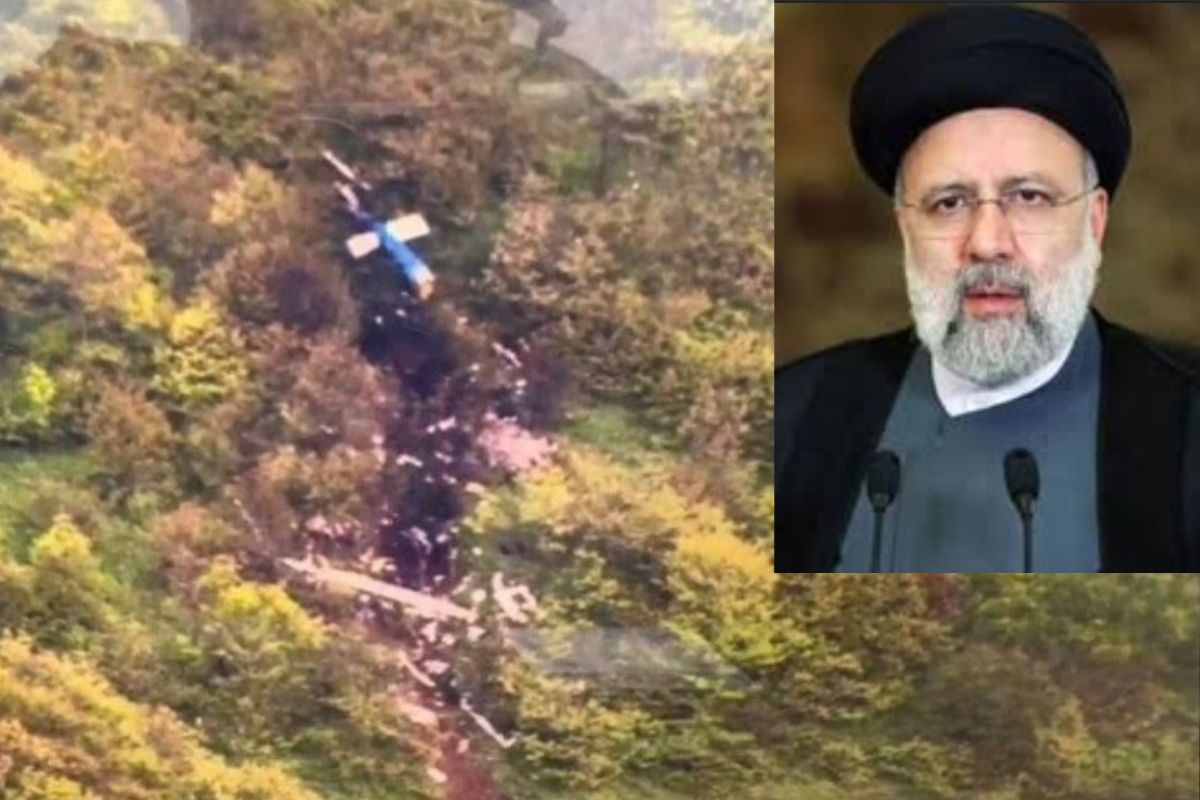
TEHRAN: The helicopter carrying Iran’s President Ebrahim Raisi and other officials crashed amid bad weather in a mountainous and forested section of the country, resulting in Raisi’s death.
After serving as president for over three years, the 63-year-old, who represents hardline and conservative political groups in Iran, seemed certain to seek reelection the next year.
Ayatollah Ali Khamenei, the 85-year-old Iranian supreme leader, was eyed to be succeeded by Raisi, a former chief justice.
Raisi was born in northeastern Iran’s Mashhad, which is a centre of Shia Muslims. In the Qom seminary, where he studied under eminent academics like Khamenei, he received religious education and training.
He donned a black turban, just like the supreme leader, signifying that he was a sayyid, or a descendent of the Prophet Muhammad. Twelver Shia Muslims place special importance on this rank.
Before moving to Tehran in 1985, Raisi gained expertise as a prosecutor in a number of different jurisdictions.
Human rights organisations claim that he was a member of a committee of judges in the capital city that oversaw the execution of political detainees.
The late president had a lengthy tenure on the Assembly of Experts, which selects the supreme leader’s successor in the case of the latter’s demise.
In 2014, he was selected by Khamenei to head the Astan Quds Razavi, and he served as attorney general for two years.
The eighth Shia imam, Imam Reza, has a shrine, and it is looked for by the enormous bonyad, or charity trust, which is endowed with billions of dollars in assets.
When Raisi first entered the presidential race in 2017, he unsuccessfully challenged former President Hassan Rouhani, who stood for the centrist and moderate factions, for reelection.
Following a brief break, Raisi was gaining notoriety as the next leader of the Iranian judiciary, having been chosen by Khamenei in 2019.
In an effort to win over the public, he travelled around the province on multiple occasions, presenting himself as a champion of justice and an adversary of corruption.
In the midst of poor voter attendance and the widespread disqualification of moderate and reformist contenders, Raisi was elected president in 2021 and seemed to have established a solid platform for reelection.
Like other senior Iranian leaders, he kept his most caustic remarks for the United States and Israel, and then for their Western friends.
Since the beginning of the Gaza War in October, Raisi has made numerous statements denouncing the “genocide” and “massacres” that Israel is carrying out against the Palestinian people, as well as has urged the international community to step in.
Following Israel’s destruction of Tehran’s Syrian consulate and the deaths of seven IRGC members, including two generals, he vowed to exact retribution on the country.
He also applauded Iran’s response, which involved firing hundreds of drones and missiles at Israel. The majority of these were shot down by an alliance of Israeli partners, but Iran nevertheless declared the operation a success.
Regarding the Joint Comprehensive Plan of Action (JCPOA), Iran’s 2015 nuclear agreement with world powers, Raisi was hardline. The JCPOA has been in limbo since former US President Donald Trump unilaterally withdrew from it in 2018.
He supported Khamenei’s adoption of the “resistance” and “resilience” strategic policies in the face of the most severe sanctions Iran has ever experienced, which were put in place after the nuclear deal collapsed.
The late president was a close ally of the Islamic Revolutionary Guard Corps (IRGC) and a fervent supporter of the political and armed “axis of resistance” that Iran backs throughout the region, especially in Yemen, Syria, Iraq, and Lebanon.
In addition, he was a fervent supporter of Syrian President Bashar al-Assad, whom Iran has backed in his government’s bloody conflict with the country’s opposition.