

Syria’s Oil Heartland Faces Growing Environmental Catastrophe
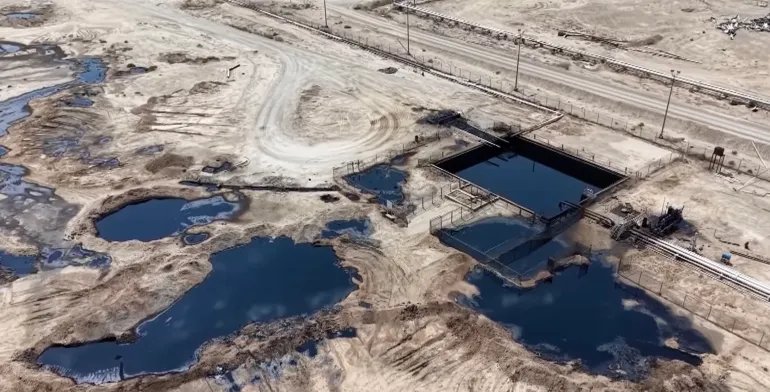
Deir Az Zor, Syria (VoM): Once a hub of Syria’s oil wealth, the al-Taim oilfield in Deir Az Zor has become the epicenter of a slow-moving environmental disaster. Years of war, neglect, and destroyed infrastructure have turned the desert province into a toxic wasteland, where rivers of oil sludge now flow freely into the soil.
The once-functional disposal systems that injected hazardous byproducts deep underground were destroyed during years of fighting, leaving carcinogenic produced water and crude oil to seep unchecked across the desert floor. What began as localized spills has now grown into a 10-kilometer (six-mile) stretch of contaminated sludge visible even from space.
“This kills the birds instantly,” said Mohammed al-Touma, a safety engineer at the site. “No one cares. Please tell the world about this toxic, radioactive waste.”
Deir Az Zor has long been marginalized by Damascus, and the war only deepened its neglect. The province endured years of ISIL control, heavy bombardment by the US-led coalition and Russia, and fierce battles among Syrian government forces, Iranian-backed militias, and tribal groups. Each phase of the conflict left behind further damage to the oil infrastructure.
Today, the evidence of destruction remains: pipelines riddled with bullet holes, fuel tanks blasted open, and steel structures twisted by airstrikes. ISIL once drained the field to fund its operations, while subsequent bombings sought to cut off that revenue stream. The result is a poisoned inheritance that residents now live with daily.
The greatest danger looms just 15 kilometers away: the Euphrates River, a critical water source for millions in Syria and Iraq. Experts warn that one flash flood or heavy storm could carry the toxins into the river, contaminating crops, wells, and drinking supplies downstream.
Despite repeated appeals, both past and present Syrian governments have taken no action. Local officials say they have been promised solutions, such as new disposal wells, but nothing has materialized. “We’ve asked. We’ve been promised. Nothing happens,” said one official.
The new government in Damascus, already burdened by post-war reconstruction and ongoing security challenges, has shown little capacity or willingness to prioritize environmental repair. With hospitals barely functioning and electricity scarce in Deir Az Zor, the crisis has slipped far down the national agenda.
For now, the toxic slick continues to grow in silence, carving a dark scar across the desert. Oil, once a source of livelihood and prosperity, now threatens to destroy the very land and people it once sustained.
Unseen by much of the world, this spreading river of poison stands as one of the Syrian war’s most enduring and overlooked legacies.
@Voice of Malaysia news