

20,441 Summonses Issued in Eight Months
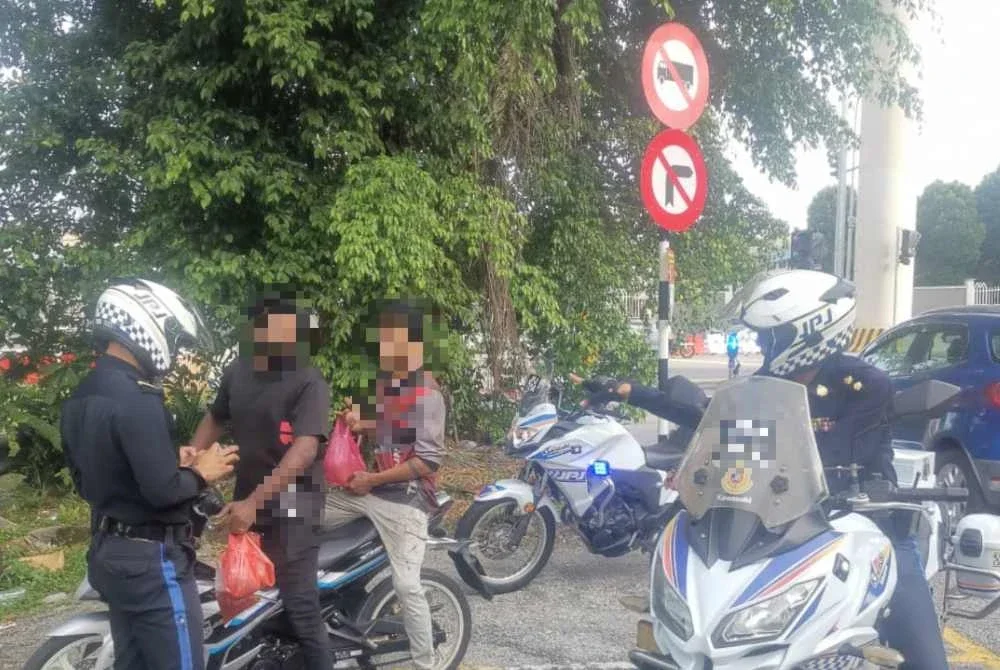
SHAH ALAM: “I didn’t notice the red light” is among the most common excuses given by motorists after being stopped for failing to obey traffic signals.
For the Selangor Road Transport Department (JPJ), the excuse may sound familiar, but a lapse lasting only a few seconds should not be taken lightly as it could result in serious accidents or even loss of life.
Selangor JPJ director Datuk Ahmad Kamarunzaman Mehat said running red lights was among the most worrying and dangerous traffic offences.
He said some offenders claimed they were in a hurry to get to work, pick up their children, attend appointments or keep up with their daily schedules.
“Some claim they still had enough time to clear the junction before the light turned red, including when the signal was nearing the end of the yellow phase.
“A few seconds may seem insignificant, but they can lead to high-speed collisions,” he said.
He added that another common excuse was that the vehicle behind was following too closely, making drivers afraid to brake suddenly.
“In some cases, offenders claim they did not see the traffic lights, particularly at complex intersections, during bad weather or when their view was obstructed.
“Others cite personal emergencies, such as taking a family member to hospital, while some admit they were simply following the vehicle in front,” he said.
Ahmad Kamarunzaman said some motorists also mistakenly believed the light was still green or yellow due to misjudgement or a lack of attention to changing signals.
He added that motorcyclists and pedestrians faced a greater risk because they did not have the physical protection provided by a vehicle.
“A single collision can also trigger further accidents when vehicles behind are forced to brake suddenly or make dangerous evasive manoeuvres, besides causing traffic congestion,” he said.
According to Selangor JPJ records, 32,471 summons notices were issued for running red lights between January and August 2024.
“The figure fell to 26,256 notices during the same period last year before declining further to 20,441 notices between January and August this year.
“The comparison shows that the number of summons notices in 2025 decreased by 6,215, or 19.1 per cent, compared with the 2024 baseline, while 2026 recorded a further reduction of 5,815 notices, or 22.1 per cent,” he said.
Technology, Targeted Operations Used to Catch Offenders
Ahmad Kamarunzaman said one of the enforcement methods involved deploying officers at strategic locations to capture photographs or videos of vehicles committing offences.
“The footage shows the type of vehicle, registration number, status of the traffic lights and the vehicle’s movements before enforcement action is taken,” he said.
He said JPJ also deployed unmarked vehicles to monitor motorists’ actual behaviour without their actions being influenced by the visible presence of enforcement officers.
“This approach is important to ensure that motorists comply with traffic laws not only when they see JPJ officers or enforcement vehicles, but every time they are on the road.
“Technology also plays a role, with the Automated Awareness Safety System (AwAS) used to automatically detect and record red-light offences,” he said.
He said the system operates around the clock, with running red lights among nine major offences receiving particular attention.
“For example, during the 2025 Hari Raya Aidilfitri Special Operation (Op HRA), running red lights was the most frequently recorded offence, accounting for 81 of the 115 cases detected,” he said.
Ahmad Kamarunzaman said information from the public also helped JPJ identify recurring offences and hotspot locations.
“Through e-Aduan@JPJ on the MyJPJ application, members of the public can submit photographs or videos, locations and other information related to traffic offences.
“This helps JPJ carry out further monitoring and targeted operations based on the information received,” he said.
However, he stressed that a public complaint did not automatically mean the person reported would be considered guilty, as all information must first be assessed.
“Information, photographs or videos received must be evaluated for authenticity, clarity of evidence and the facts surrounding the incident before enforcement action is taken,” he said.
For the remainder of the year, Ahmad Kamarunzaman said JPJ would focus on more consistent, data-driven enforcement while strengthening advocacy efforts to change road-user behaviour.
“This will include operations at hotspots, covert surveillance, the deployment of unmarked vehicles and the use of enforcement technology such as AwAS.
“At the same time, complaints submitted through e-Aduan@JPJ will continue to be used as a source of information to identify locations and offences requiring attention,” he said.
He stressed that road safety was not solely the responsibility of enforcement agencies, as every road user had a role to play in ensuring that every journey ended safely.
Sinar Harian