

US Court Orders Halt to Trump’s Ballroom Construction
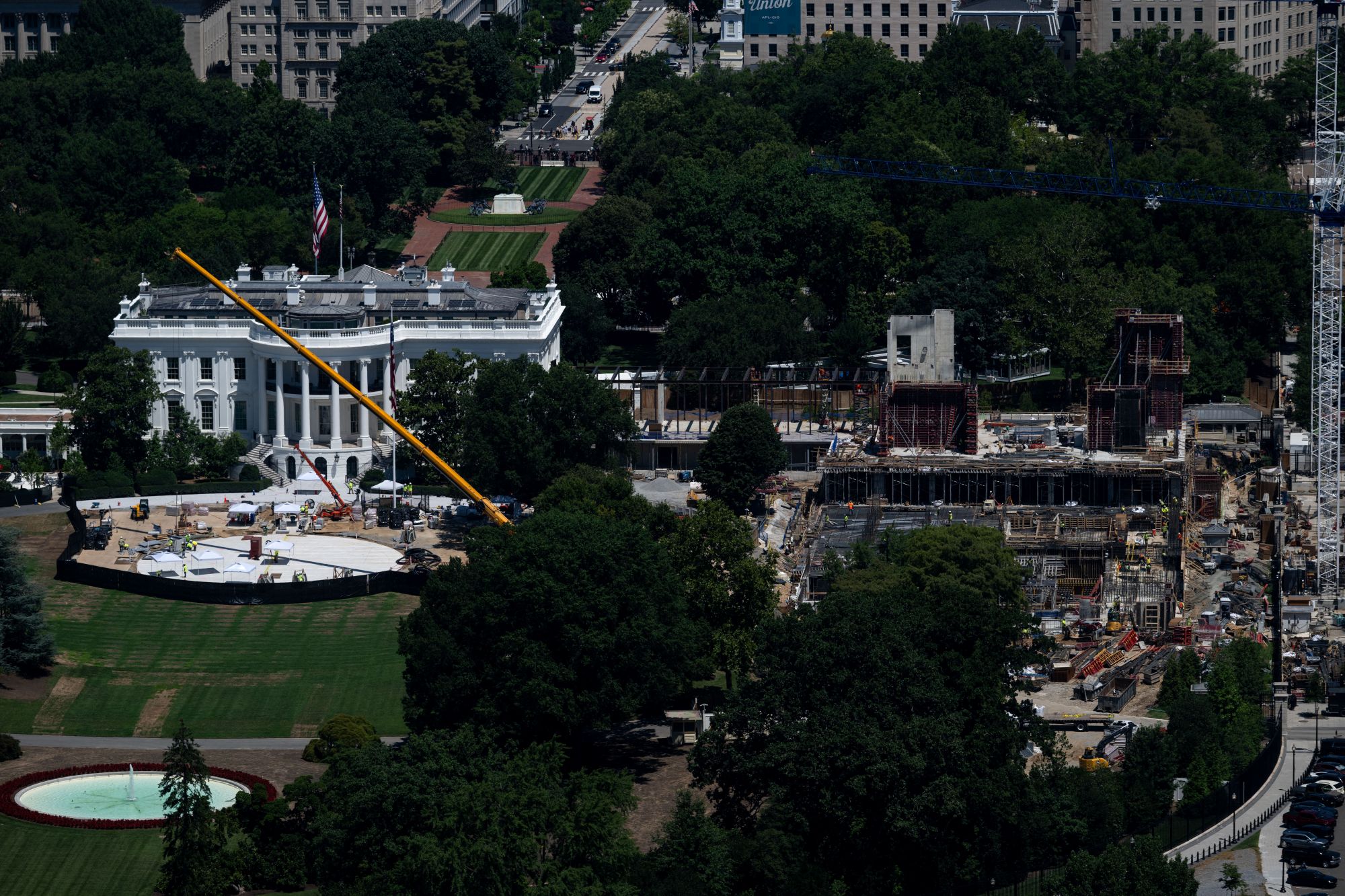
WASHINGTON: An appeals court has upheld an order to halt construction of a ballroom that had been a pet project of Donald Trump at the White House, sparking his anger and paving the way for another Supreme Court battle over the limits of presidential power.
The US Court of Appeals for the District of Columbia Circuit, which had previously allowed construction to proceed while the case was being considered, agreed with a lower court that the extensive White House renovations required clear congressional approval.
The court stayed its own ruling for two weeks to give Trump time to ask the Supreme Court to intervene.
The Republican president denounced the 2‑1 majority decision, calling it egregious, politically motivated and unlawful.
The two judges in the majority were appointed by Democratic presidents, while the dissenting judge was nominated by Trump himself.
Trump vowed in a lengthy social media post to immediately appeal to the Supreme Court.
“This decision, made after the bulk of the work has been done and paid for, is a National Security Threat of the highest order. It is also a national embarrassment,” Trump said in another post on his Truth Social platform on Friday night.
Trump initially described the ballroom construction as necessary for hosting gala events, but has since repeatedly stressed the concurrent construction of an underground military bunker and other security features.
Under the lower court judge’s initial order, construction work was only allowed to continue on certain structures, including those below ground.
Trump, who has repeatedly complained that the White House lacks sufficient space for large galas like state dinners, unilaterally ordered the ballroom’s construction.
Work on the project began last year with the sudden demolition of the entire historic East Wing of the White House.
Since then, several photographs have shown extensive work underway to build a below‑ground complex, with some concrete walls already emerging above ground.
Trump insisted the ballroom would be funded privately, but media reports in June indicated that a significant amount of taxpayer money was being used for the project, with costs potentially reaching US$600 million (RM2.4 billion).
AFP