RTS Link: Government Reviews Traffic Decongestion Plan to Avoid New Congestion Points – Ahmad Zahid
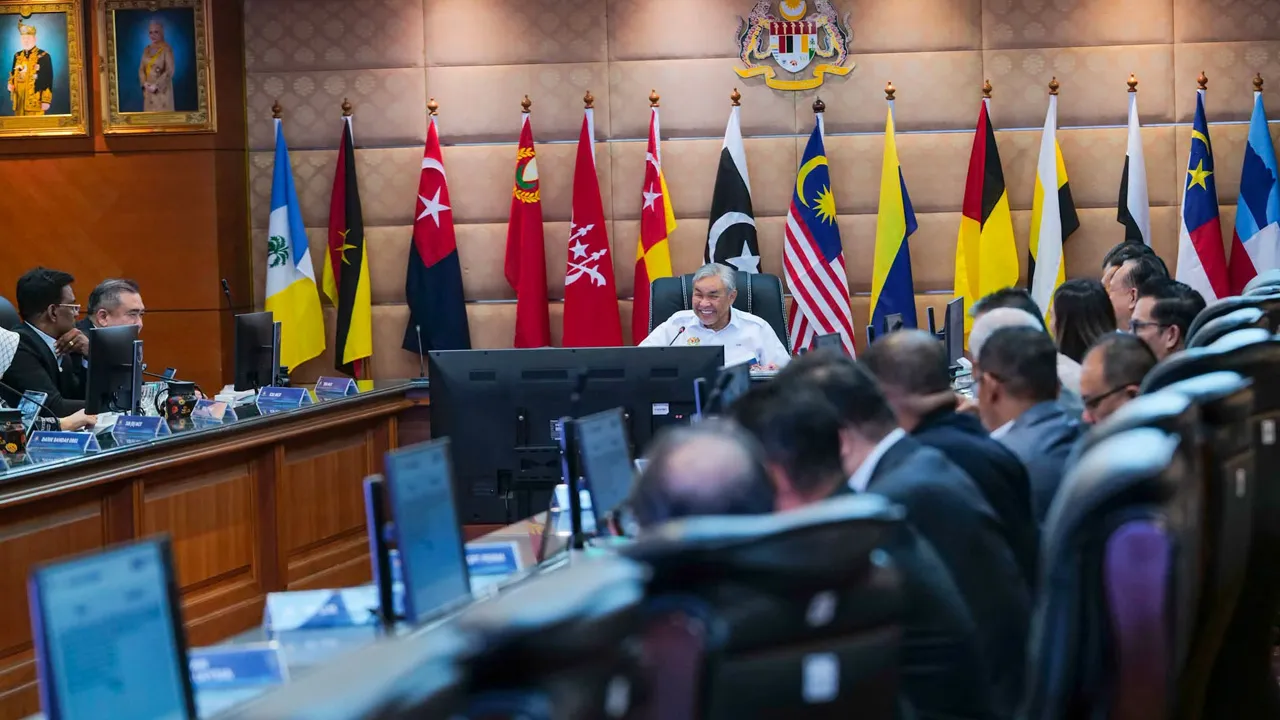
Ahmad Zahid chairing the Cabinet Committee Meeting on Road Safety and Congestion (JK-MKKJR) Bill 1/2026 here today. - Photo from Zahid Hamidi's FB
69
Share
PUTRAJAYA: Planning to decongest traffic around the Johor Bahru city centre is being scrutinised to prevent the formation of new congestion points ahead of the operation of the Rapid Transit System (RTS) Link between the city and Singapore.
Deputy Prime Minister Datuk Seri Ahmad Zahid Hamidi said the planning, which involves coordination between agencies and integration of the public transport system, will see changes in user movement patterns, particularly around the city centre and areas with direct connections to the system.
“This approach is in line with the aspiration for a more integrated, efficient, safe and people-friendly public transport system, particularly in supporting smoother cross-border mobility,” he said in a statement after chairing the Cabinet Committee Meeting on Road Safety and Congestion (JK-MKKJR) Bill 1/2026 here today.
The RTS Link is scheduled to begin operations on January 1 next year and is expected to carry up to 10,000 passengers per hour per direction.
The system will connect Bukit Chagar in Johor Bahru with Woodlands North in Singapore.
On July 2, Transport Minister Anthony Loke in the Dewan Rakyat said the Federal Government will provide funds to finance the development cost of the Elevated Autonomous Rapid Transit (E-ART) project in Johor as part of efforts to address the projected congestion expected when the RTS Link begins operations.
Loke said the Ministry of Transport (MOT), in collaboration with the Johor State Government, has drafted a traffic decongestion plan to strengthen the existing public transport system, including the BAS.MY service network which will be expanded to 28 routes involving 254 bus units including electric buses.
He said, through the Stage Bus Service Transformation (SBST) 2.0 Programme, a total of 157 bus units are allocated for the Johor Bahru Sentral and Bukit Chagar routes, which are expected to commence operations in early 2027.