

Australia disregarded Assange. He became a martyr over time
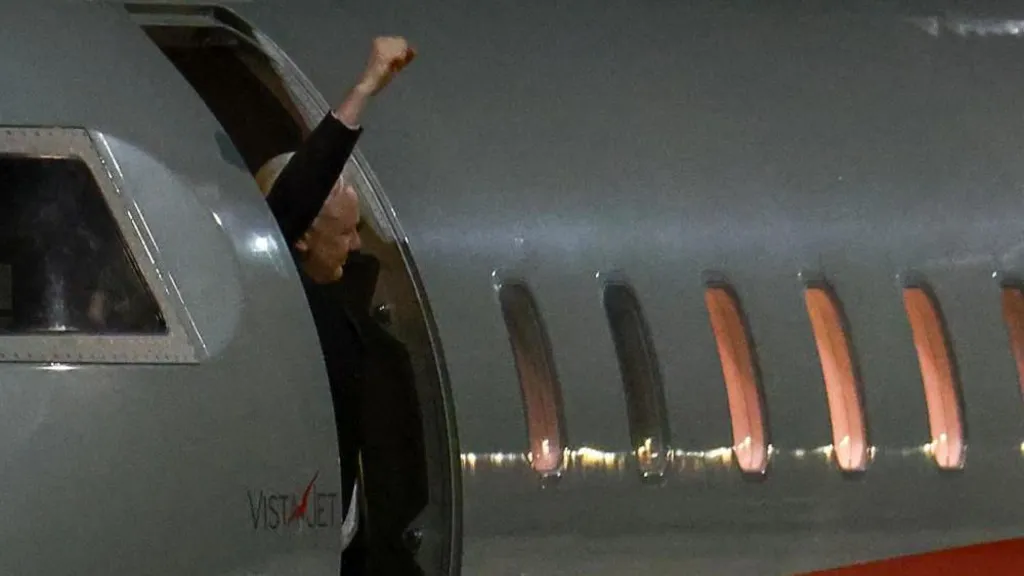
Julian Assange triumphantly lifted his fist in the air and gave his wife an emotional embrace upon setting foot on Australian land for the first time in fourteen years.
As he drove out of the air base, a few people shouted and waved.
However, there were no huge crowds or bubbly to be seen, so this was hardly a hero’s welcome.
Nevertheless, if you look closely, you may see evidence of how hard Australia’s government has tried to win back the creator of WikiLeaks.
Behind closed doors, he was escorted off the aircraft by Australia’s High Commissioner to the United Kingdom, Stephen Smith, a former foreign minister under Rudd from 2007 to 2010, and former prime minister Kevin Rudd.
And the country was given a muted welcome back to Assange by the current prime minister, Anthony Albanese, minutes after he landed.
“I am very pleased that this saga is over, and earlier tonight, I was pleased to speak with Mr. Assange to welcome him home,” he stated.
This is a vast cry from the atmosphere that existed when Assange was initially in trouble back in 2010.
He had embarrassed Washington and allegedly put their spies and agents at risk by releasing hundreds of unredacted US papers on the conflicts in Afghanistan and Iraq, including a film of a US helicopter firing on civilians.
Soon after, he was the target of Swedish police, who claimed he had sexually abused two women. He refuted these accusations, saying they were made for political reasons.
Assange was not well received in Canberra, to the point where he famously claimed that the then-prime minister had “betrayed” him.
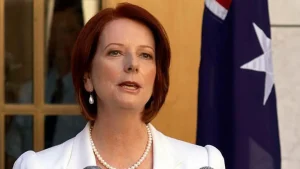
“Let’s not attempt to sugarcoat this… If there hadn’t been an illegal act, information wouldn’t be on WikiLeaks, Julia Gillard had stated.
“And lastly, there is the common-sense assessment regarding the egregious irresponsibility of this behavior.”
Her government said it was giving US authorities “every assistance” and urged Australian investigators to look into whether he had breached any laws there as well, far from volunteering to represent him.
Later on, they would soften their words, but Gillard insisted that “there’s not anything we can, or indeed, should do.”
For ten years, not much would change on the outside.
Following his fruitless attempt to contest Sweden’s international arrest warrant—which he claimed was a ruse to extradite him to the United States—Assange fled to the Ecuadorian embassy in London, where he spent nearly seven years.
He was compelled to leave the embassy in 2019 and was detained while he battled to prevent his extradition to the United States.
All sides of Australia’s political spectrum began to urge Assange’s release as the case progressed and his health deteriorated. However, it persisted in falling short of the top positions in the nation.
The only prime minister to cause a stir with remarks on Assange’s freedom was Scott Morrison in 2018, around the time that Baywatch star Pamela Anderson traveled the nation advocating for the WikiLeaks founder.
Morrison told a local radio station, “I’ve had plenty of friends who have asked me if they can be my special envoy to sort the issue out with Pamela Anderson,” comments that Anderson deemed “smutty” and “unnecessary.”
“Period of opportunity”
But Assange’s group told the BBC they hoped for change if Labor Prime Minister Anthony Albanese was elected in 2022.
The rape investigation was abandoned by Swedish prosecutors, who claimed that the evidence had become weaker with time. Films started to highlight Assange’s efforts and portray him as a brave defender of the truth, all the while disclosing his poor health and mistreatment in prison.
Then word leaked out that he was father to two small boys, conceived while he was stationed at the Ecuadorian embassy and raised by their mother alone.