

Thousands Rally in Kenya to Mark Anniversary of Anti-Tax Protests
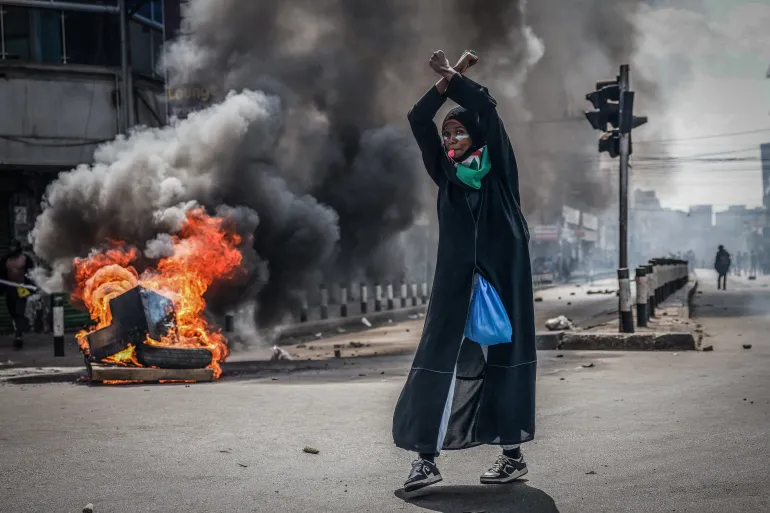
Nairobi, Kenya: Thousands of demonstrators flooded the streets of Nairobi and other cities on Wednesday to mark the first anniversary of Kenya’s deadly youth-led protests against proposed tax hikes. The mass mobilization came amid heightened security concerns and growing discontent over police brutality and economic stagnation.
Rights groups say at least 60 people were killed by security forces during last year’s demonstrations, which erupted over President William Ruto’s proposed finance bill. The protests reached their peak when demonstrators stormed the Kenyan Parliament, prompting a violent state crackdown.
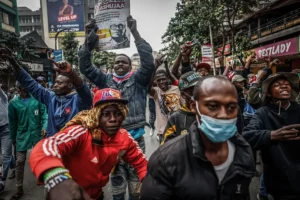
On the anniversary, police sealed off main roads leading to the capital’s central business district and surrounded key government buildings with razor wire barricades. Despite the visible police presence, protesters—many of them young men—marched peacefully, waving Kenyan flags and holding placards bearing the names and faces of those killed last year.
Chants of “Ruto must go” echoed across the crowd as demonstrators voiced their frustration with the government’s handling of the economy, corruption, and civil liberties.
“I’ve come here as a Kenyan youth to protest. Eve, a 24-year-old demonstrator, stated, “We have the right to protest—for the sake of our fellow Kenyans who lost their lives last year.” “The police are supposed to protect us, but they kill us.”
Police Brutality and Rising Anger
This year’s anniversary takes place against a backdrop of renewed public outrage over police violence. Earlier this month, Albert Ojwang, a 31-year-old teacher and blogger, was found dead in police custody after being arrested for criticizing a senior officer. On Tuesday, the prosecution charged six individuals, including three police officers, with his murder; all of them pleaded not guilty.
While police have said that protests are allowed as long as they remain “peaceful and unarmed,” rights groups reported that a group of peaceful protesters was attacked last week by motorbike-riding gangs, commonly known as “goons,” who appeared to be operating alongside security forces.
On Tuesday, the United States, the United Kingdom, Canada, and other Western nations issued a joint statement urging Kenyan authorities to “facilitate peaceful demonstrations and refrain from violence.”
“The use of plain-clothed officers in unmarked vehicles erodes public trust,” the statement warned—a clear reference to controversial tactics used during last year’s protests.
Kenya’s Ministry of Foreign Affairs responded by reaffirming the government’s commitment to accountability, stating that all allegations of misconduct would be addressed through institutions like parliament and the judiciary. It added that diplomatic relationships should be based on “mutual respect” and an understanding of “unique governance contexts.”
Youth Disillusionment with Ruto
![Kenya police interact with demonstrators marching in downtown Nairobi, Kenya [Luis Tato/AFP]](https://vom24.com/wp-content/uploads/2025/06/AFP__20250625__63NZ9J8__v2__HighRes__TopshotKenyaUnrestPolitics-1750838425-300x200.webp)