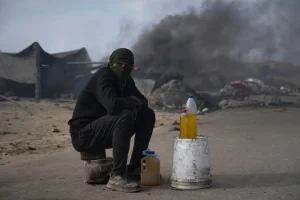
Young Palestinians in Gaza Turn Plastic into Fuel Amid War and Starvation
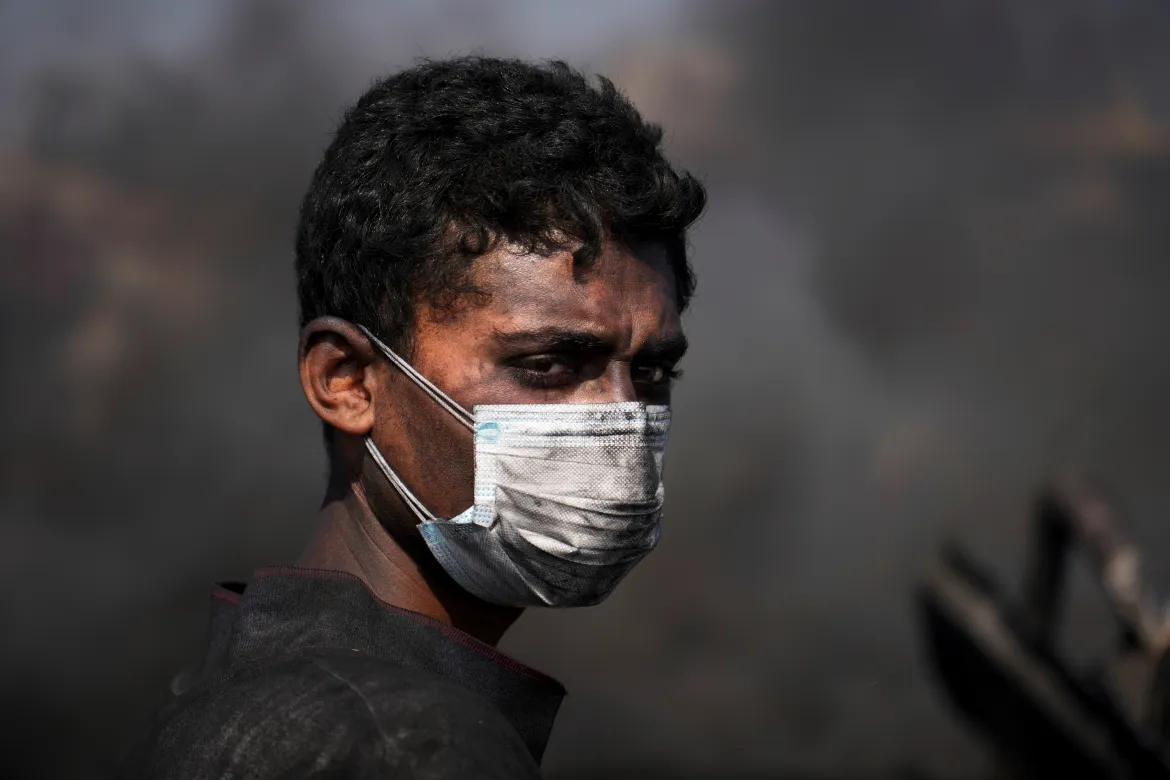
Gaza Strip: Along the Sea Road south of Gaza City, amid the ruins of war and the stench of smoke, a group of displaced young Palestinians is turning plastic waste into fuel—a desperate but innovative response to the fuel shortages crippling the besieged territory.
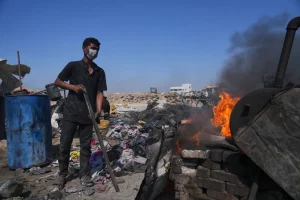
With commercial fuel supplies nearly cut off, these youth collect discarded plastic and process it in makeshift metal burners to produce crude fuel. The product is then bottled and sold at roadside stalls to local residents and passersby, providing a vital—albeit hazardous—source of income in a war-torn economy.
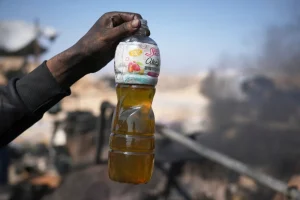
“We have no jobs, no electricity, and barely any food,” said one of the youth, who requested anonymity. “This is dangerous work, but it’s the only way to survive.”
The entire operation takes place in the open air, where thick black smoke pours from the burning drums and blankets the surroundings. Tents line the road, serving as storage areas and resting spots for the workers between long, exhausting shifts. Horse-drawn carts and pedestrians regularly move through the area, weaving past clouds of toxic fumes.
They sell the fuel, primarily for generators and basic transportation, at a significantly lower price than the limited commercial fuel available. The process is rudimentary and risky, involving direct contact with open flames and prolonged exposure to noxious gases.
A Struggle to Survive
The makeshift fuel industry has displaced most of its participants from their homes, leaving them without access to formal employment or humanitarian aid. Their work is emblematic of Gaza’s broader struggle for survival.
According to the UN’s Integrated Food Security Phase Classification (IPC), over 500,000 people in the Gaza Strip are now facing catastrophic levels of hunger, while the rest of the population endures high levels of acute food insecurity.