

Antibiotic-Resistant Bacteria in Food: What Do We Need to Know?
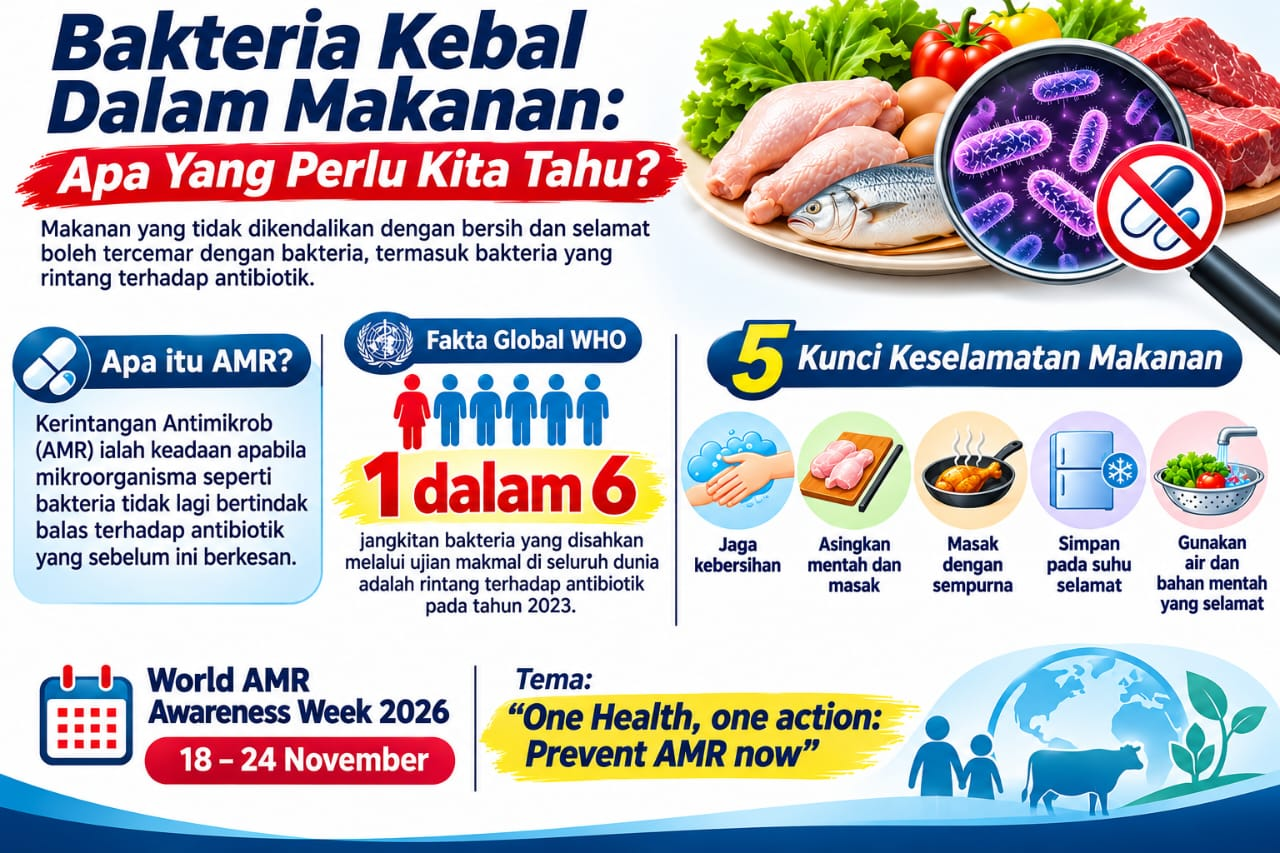
Antimicrobial Resistance (AMR) occurs when microorganisms such as bacteria, viruses, fungi and parasites undergo changes that enable them to become resistant to antimicrobial medicines used to treat infections. In the context of bacteria, this condition is known as antibiotic resistance, where bacteria can survive and multiply even when exposed to certain antibiotics. This condition is often referred to as “antibiotic-resistant bacteria”.
Did you know that the threat of AMR is not limited to hospital treatment or antibiotic use among humans? Food that is not handled hygienically and safely can not only cause food poisoning but may also become a route for the transmission of antibiotic-resistant bacteria to humans. If an infection occurs, treatment may become more difficult and require alternative antibiotics.
How Can Resistant Bacteria Spread Through Food?
This problem can begin when antibiotics are used excessively or without proper control in livestock farming and agriculture. This allows antibiotic-resistant bacteria to survive and multiply in farm animals. These resistant bacteria can subsequently contaminate meat, milk, eggs and agricultural produce through contaminated water or environments.
Resistant bacteria can reach humans through contaminated food, particularly if the food is not washed, handled hygienically or cooked thoroughly. Cross-contamination can also occur when bacteria from raw meat are transferred to other foods through unwashed hands, knives or cutting boards.
Therefore, food safety is not merely about ensuring that food looks clean or tastes good. How food is handled, from the kitchen to the dining table, also plays a role in reducing the risk of bacterial transmission, including antibiotic-resistant bacteria.
Practical Guide: Five Keys to Food Safety
To curb the spread of resistant bacteria and prevent them from contaminating daily meals, preventive practices at food preparation premises and at home serve as the main line of defence.
The following are the Five Keys to Food Safety recommended for every food handler and consumer to practise:
First, keep clean. Wash your hands before preparing food and before eating, as well as after handling raw food. Ensure that utensils and food preparation surfaces are always clean.
Second, separate raw and cooked food. Use clean utensils and avoid using the same knives or cutting boards without washing them first.
Third, cook food thoroughly. Foods such as chicken, meat, eggs and seafood must be cooked thoroughly to help destroy microorganisms that can cause disease.
Fourth, keep food at safe temperatures. Do not leave cooked food at room temperature for too long. Proper storage helps control the growth of microorganisms.
Fifth, use safe water and raw materials. Choose clean raw ingredients that are suitable for consumption and use clean water when preparing food.
These Five Keys to Food Safety are not specific methods for detecting antimicrobial-resistant bacteria. However, these practices help reduce contamination, cross-contamination and the risk of foodborne infections.
Indirectly, these simple measures support broader efforts to reduce opportunities for the spread of resistant bacteria through food.
Global Initiative: World AMR Awareness Week 2026
As part of efforts to strengthen international public awareness of this crisis, global initiatives continue to be intensified through World AMR Awareness Week 2026, held from November 18 to 24, 2026.
This global awareness campaign carries the official theme: “One Health, One Action: Prevent AMR Now”.
The theme places particular emphasis on the holistic One Health approach, which connects three main sectors: human health, livestock health and environmental sustainability.
Scientists have confirmed that the problem of drug resistance cannot be addressed in isolation.
The disposal of agricultural waste into rivers, excessive antibiotic use in livestock farming and poor hygiene practices during food preparation at home are all interconnected.
Therefore, coordinated action across these three areas is essential to effectively contain the threat of AMR.
Malaysia’s Efforts to Address AMR Through the One Health Approach
In Malaysia, efforts to address antimicrobial resistance (AMR) are implemented through the Malaysian Action Plan on Antimicrobial Resistance (MyAP-AMR) 2022–2026.
The plan involves multisectoral cooperation encompassing human health, animal health, agriculture, food safety and the environment through the One Health approach.
In the context of food safety, the food sector’s contribution includes preventing food contamination through monitoring and enforcement activities under the Food Act 1983 and its subsidiary regulations, as well as conducting research to detect antimicrobial-resistant bacteria within the food chain.
In addition, food safety education and promotional activities targeting food business operators and the public are being strengthened to encourage clean and safe food handling practices, thereby helping to prevent the spread of resistant bacteria through food.
Shared Responsibility in Curbing AMR
Addressing the threat of resistant bacteria in food requires continuous commitment from all levels of society.
From raw material producers on farms and operators of food business premises to consumers in their own homes, every individual has an important responsibility to ensure that the food supply chain remains safe.
By practising the Five Keys to Food Safety, applying the “Look, Smell and Taste” concept, and supporting the One Health approach, everyone can play a role in ensuring that the food prepared and consumed remains safe.
These practices not only help protect families from foodborne illnesses but also contribute to efforts to prevent the spread of antimicrobial-resistant bacteria (AMR) for the health and well-being of all.
One Health, One Action. Preventing AMR Begins With Our Actions Today.
Author:
The writer is a Food Technologist Officer with the Food Safety and Quality Programme, Ministry of Health Malaysia.
UTUSAN