

Malaysia-Turkiye Expand Strategic Cooperation
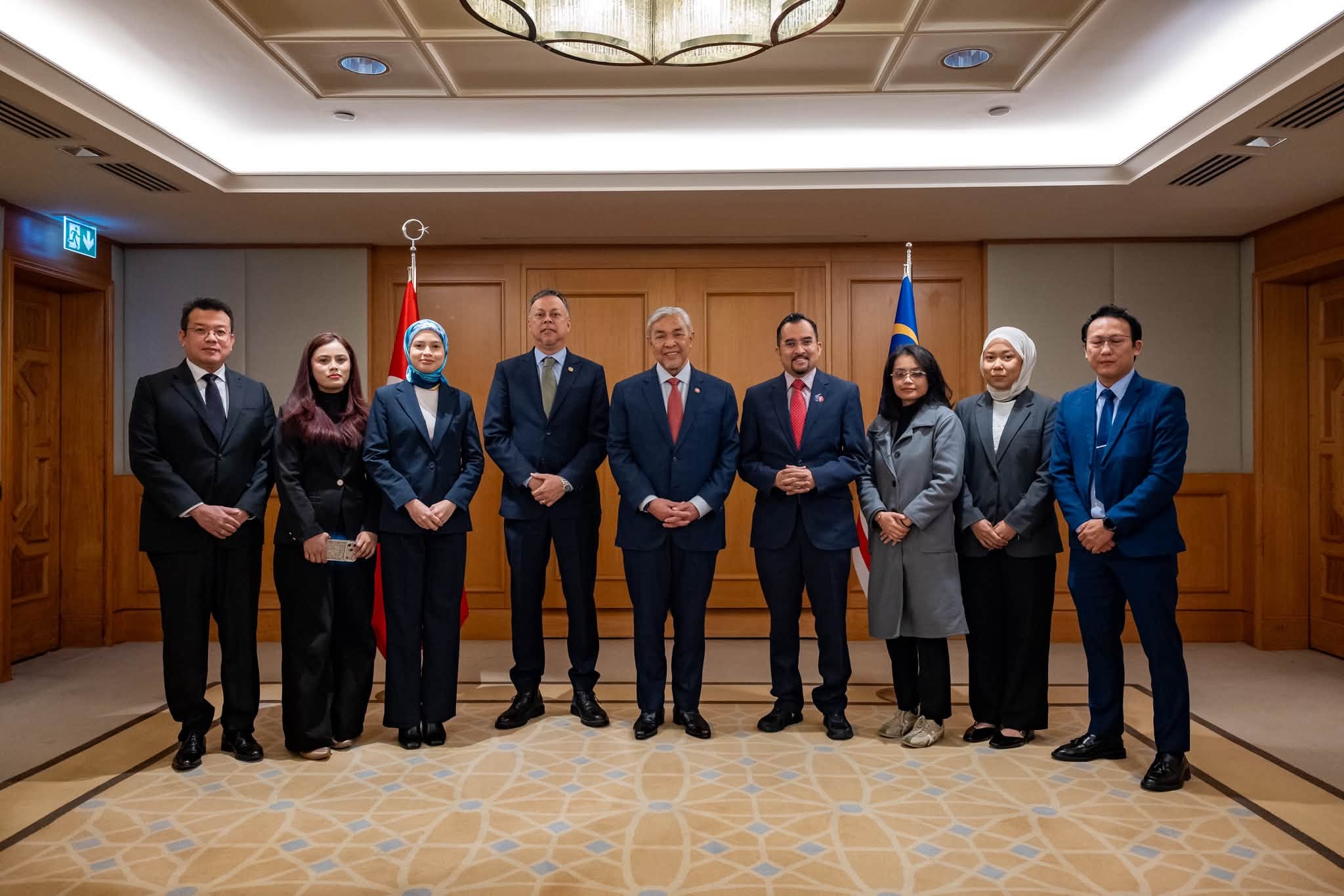
ISTANBUL: Strategic cooperation between Malaysia and Turkiye has been expanded in the defence, technology transfer, investment and human capital development sectors to strengthen bilateral relations and create new opportunities for local industries.
The developments resulted from Deputy Prime Minister Datuk Seri Dr Ahmad Zahid Hamidi’s working visit to Turkiye, which began on November 5 in conjunction with the TRT World Forum 2026 at the Istanbul Congress Center (ICC).
The visit went beyond fulfilling an international diplomatic agenda, successfully translating the close ties between the two countries into high-level strategic cooperation.
During the visit, Ahmad Zahid paid a courtesy call on Turkish President Recep Tayyip Erdogan to discuss the future direction of relations between Putrajaya and Ankara, including the target of increasing bilateral trade from US$5.51 billion in 2025 to US$10 billion by 2030.
The historic discussions also covered expanding cooperation in investment, defence, technology transfer, Technical and Vocational Education and Training (TVET), the halal industry and disaster management.
Both leaders also exchanged views on developments in Palestine, Lebanon and Syria, emphasising the protection of civilians and access to humanitarian assistance.
Ahmad Zahid, who is also Rural and Regional Development Minister, reaffirmed Malaysia’s commitment as the coordinating country for ASEAN-Turkiye relations to strengthen strategic cooperation between the two regions, while leveraging Malaysia’s position to expand its economic and diplomatic influence globally.
Meanwhile, during a meeting with Turkish Vice-President Cevdet Yilmaz, both sides identified high-value investment opportunities in the food and beverage, semiconductor, artificial intelligence (AI), electrical and electronics, and defence sectors.
They also explored cooperation in regional development, sustainable cities and the economic empowerment of rural communities.
The working mission also focused on multilateral diplomacy through the Developing Eight Organisation for Economic Cooperation (D-8) and the Organisation of Islamic Cooperation (OIC), as well as relations with Lebanon through discussions with D-8 Secretary-General Sohail Mahmood and Lebanese Deputy Prime Minister Dr Tarek Mitri.
On November 7, Malaysia’s TVET development received a further boost through the signing of Letters of Cooperation (LoC) between Universiti Kuala Lumpur (UniKL) and Universiti Poly-Tech Malaysia (UPTM), both under Majlis Amanah Rakyat (MARA), and Sabanci University and Yildiz Technical University (YTU).
Through the collaboration with Sabanci University, the two Malaysian universities will jointly explore the implementation of bachelor’s and master’s degree programmes, academic curriculum coordination, and pathways for doctoral studies through collaborative supervision and research.
Meanwhile, cooperation with YTU will focus on research in ship design and model testing, utilising the university’s wave tank facilities for shallow-water studies in collaboration with the Malaysian Institute of Marine Engineering Technology (UniKL MIMET).
At the same time, a roundtable dialogue with the Turkish think tank, the Foundation for Political, Economic and Social Research (SETA), opened opportunities for further policy research, particularly on Southeast Asia-West Asia geopolitics, regional security and the role of strategic autonomy among middle powers.
Ahmad Zahid’s working visit also highlighted potential cooperation in the maritime industry through a meeting with Malaysia’s Honorary Consul in Bursa, Datuk Cevdet Sefer.
The discussions focused particularly on a proposal to develop a ship maintenance, repair and overhaul (MRO) hub in Bagan Datuk, Perak, which could benefit from Turkish shipbuilding technology.
Concluding his visit, Ahmad Zahid told a press conference on Sunday that Malaysia had proposed reviving the International Zakat Organisation (IZO), established in 2008.
He also reaffirmed Malaysia’s support for the D-8’s target of increasing trade among member countries to more than US$500 billion by 2030.
Overall, the visit went beyond fulfilling an international invitation, delivering significant added value to Malaysia while further strengthening the close diplomatic ties established between the two countries in 1964.
UTUSAN MALAYSIA