

Ongoing Negeri Sembilan Crisis Begins to Disrupt State Administration
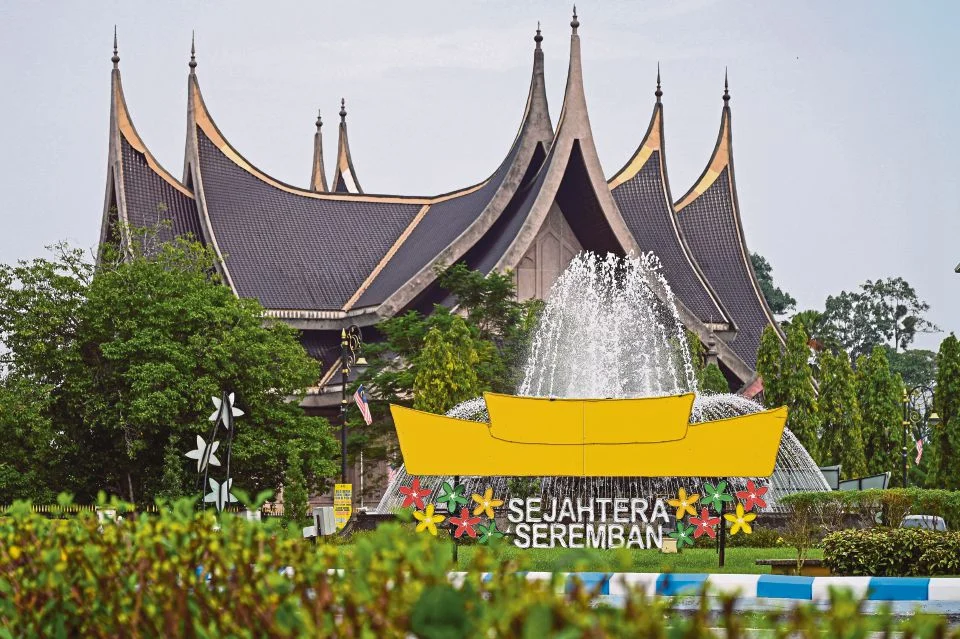
The ongoing customary and palace-related crisis in Negeri Sembilan has begun to disrupt the smooth functioning of the state administration, as well as preparations for the State Legislative Assembly sitting scheduled for next month.
As a government that was only recently formed following the conclusion of the 16th State Election (PRN) on Aug 1, the State Legislative Assembly sitting scheduled to begin on Oct 16 will be an important test of how effectively the state government’s institutions can continue to function amid the prolonged crisis.
The concern is not merely the possibility of disruption to the sitting, but that the dispute between institutions is beginning to affect administrative affairs and public confidence in the state government.
This was the view of Universiti Teknologi MARA (UiTM) Faculty of Administrative Science and Policy Studies Senior Political Science Lecturer Mujibu Abd Muis, who said the State Legislative Assembly should serve as a platform for resolving issues through constitutional processes rather than becoming an arena for further tension.
“I believe the priority now is to ensure that government affairs do not become a casualty of political and institutional disputes. The voters’ mandate must also be respected, so any dispute should be resolved promptly through constitutional channels and legitimate democratic processes.
“The people should not have to bear the consequences of a crisis they did not create, especially to the extent that it disrupts the administration and the state’s development agenda,” he said.
At the upcoming State Legislative Assembly sitting, the tabling of Budget 2027 will be among the key items on the agenda, as it is not merely a financial document but also reflects the government’s priorities in managing development and meeting the needs of the people.
“If the crisis continues, the process of drafting, coordinating and debating the budget risks being affected, particularly when there is uncertainty in the relationship between the political leadership and the administrative machinery.
“However, we need to distinguish between the government’s technical ability to prepare the budget and its political ability to secure support and ensure its smooth implementation,” he said.
Mujibu said the administrative machinery may be able to continue preparing the budget, but uncertainty over the leadership could affect policy coordination, spending priorities and the smooth functioning of checks and balances in the State Legislative Assembly.
In this context, he said an immediate resolution was crucial to allow the state government to refocus its attention on the development agenda.
Budget 2027 should not become a casualty of a prolonged crisis, as ultimately it would be the people who bear the consequences.
Meanwhile, geostrategist and National Council of Professors and Nusantara Academy for Strategic Research (NASR) Fellow Azmi Hassan said it would be appropriate for the status quo involving Menteri Besar Datuk Ismail Lasim and the previous line-up of State Executive Councillors (EXCO) to be maintained for the time being.
“It is difficult for the Menteri Besar to carry out the day-to-day administration without the assistance of the EXCO. The voters and people of Negeri Sembilan elected these assemblymen to carry out their responsibilities, but this has now been disrupted by the issue.
“The status quo is necessary. This means the government under Ismail’s leadership and the original EXCO line-up should be allowed to carry out their duties without disruption, while the dispute over who is the Yang di-Pertuan Besar should be put aside temporarily. I believe a solution will eventually be found,” he said.
Senior lawyer Datuk Shamsuddin Nawawi, meanwhile, described the revocation by Tuanku Muhriz Tuanku Munawir of the appointments of all EXCO members, effective Sept 20, as a highly significant development.
“EXCO members are indeed appointed on the advice of the Menteri Besar, but they must receive Tuanku’s consent. Once that consent is withdrawn, their appointments come to an end. Several issues and questions now arise — can the Menteri Besar administer the state alone without EXCO members?
“Can a State Legislative Assembly sitting be held without Tuanku’s consent? The Constitution states that summoning, proroguing or dissolving the State Legislative Assembly is Tuanku’s prerogative. If the State Legislative Assembly does not sit for more than six months, it will automatically dissolve,” he said.
Berita Harian