

Iran Demands ‘Fair and Comprehensive’ Deal as US Signals Progress in High-Stakes Talks
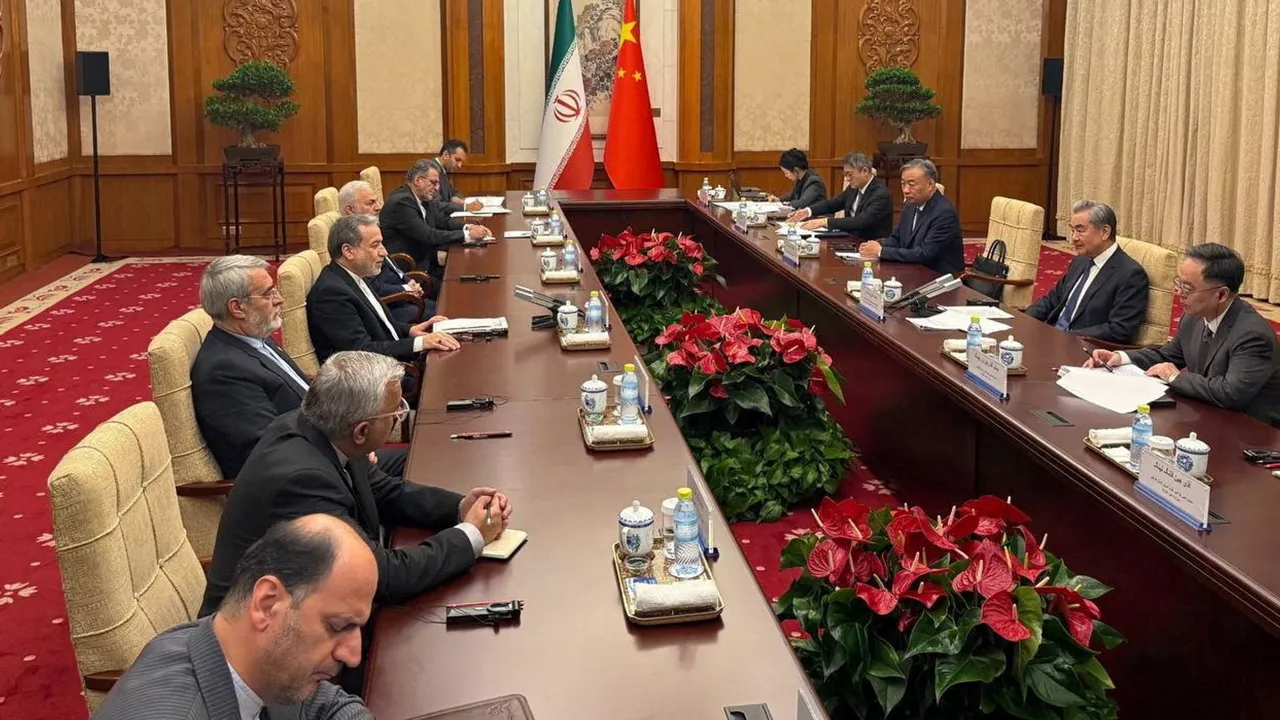
BEIJING: Iran has reiterated that it will only accept a “fair and comprehensive agreement” in ongoing negotiations with the United States, even as former U.S. President Donald Trump claimed that “great progress” is being made toward ending the conflict in the Middle East.
Iranian Foreign Minister Abbas Araqchi made the remarks following a meeting with China’s top diplomat Wang Yi in Beijing. He stressed that Tehran remains committed to protecting its national interests in any deal.
“We will do our best to safeguard our legitimate rights and interests in the negotiations,” Araqchi said. “We only accept a fair and comprehensive agreement.”
Strait of Hormuz Crisis Continues: The talks come amid ongoing tensions in the strategically vital Strait of Hormuz, which has been effectively shut since the conflict erupted on February 28 following U.S. and Israeli airstrikes on Iran.
The disruption has blocked nearly 20% of global oil supply, triggering a worldwide energy shock and volatility in financial markets.
Trump indicated that a temporary pause in U.S. maritime operations referred to as “Project Freedom” has been agreed upon to allow space for negotiations.
“Great progress has been made toward a complete and final agreement,” he said in a social media post, suggesting optimism despite the fragile situation.
Oil Prices React to Diplomatic Signals
Global oil mMarketsesponded quickly to signs of potential de-escalation:
- Brent crude dropped to around US$108.60 per barrel
- U.S. West Texas Intermediate fell to approximately US$101.06 per barrel
The decline follows earlier sharp losses, reflecting cautious optimism among investors.
Ongoing Military and Political Tensions
Despite diplomatic efforts, the situation on the ground remains tense. The United States has maintained naval escorts for commercial vessels and imposed a blockade on Iranian ports, while Iran has threatened to deploy mines, drones, and missiles in the strait.
Recent U.S. military operations reportedly targeted Iranian boats, drones, and missile systems.
Meanwhile, U.S. Secretary of State Marco Rubio emphasized that Iran must not be allowed to control maritime traffic in the region.
Fragile Ceasefire, Heavy Consequences
Although a ceasefire agreed to weeks ago is still holding, the broader conflict has already caused thousands of casualties and spread beyond Iran to neighboring regions including Lebanon and the Gulf.
According to the International Monetary Fund, even if the conflict ends immediately, the global economy may take three to four months to stabilize.
Nuclear Dispute Remains Central
At the heart of the conflict are longstanding disputes over Iran’s nuclear program. The U.S. and its allies argue that Tehran’s activities pose a security threat, while Iran insists its nuclear ambitions are peaceful and within its rights under the Nuclear Non-Proliferation Treaty.
Outlook Uncertain:
While both sides have signaled willingness to negotiate, diplomatic efforts have yet to produce a breakthrough. Only one round of direct talks has taken place so far, with further meetings yet to be confirmed.
For now, the world watches closely as the possibility of a comprehensive agreement hangs in the balance, one that could reshape regional stability and global energy markets.